The assembly is over.
What you do next isn't.
The assembly is over.
What you do next isn't.

Choose the experience built for you.


Chad Kempel is the father of seven, holder of four Guinness World Records titles, and a keynote speaker who doesn't talk about resilience — he is resilience. His message doesn't ask audiences to believe anything. It shows them proof.
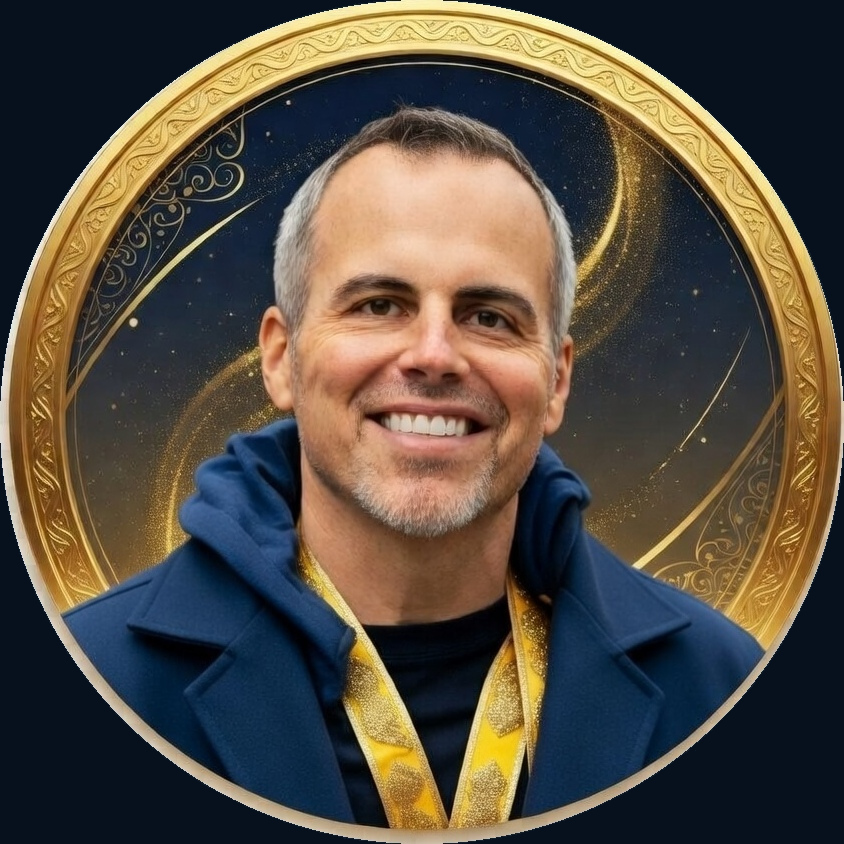

 4x Guinness World Records Title Holder
Before his quintuplets were born, doctors said they wouldn't survive. Before his first world records title, he failed publicly — twice. Before any of this, he buried two sons. He held them as they died.
Chad doesn't stand on a stage and tell people what's possible. He shows them. Four Guinness World Records. A sign that read "Anything Is Possible" — made for his father before an Ironman dedicated to him, carried across four Guinness World Records finish lines, and placed in a museum in Copenhagen after the man it was made for was gone. The belief is not.
Read the Full Story"I didn't grow up thinking anything is possible. I saw things and I thought, man, I would love to do that. But I just never thought it could be me."— Chad Kempel
Video Coming Soon — Subscribe on YouTube
"The dad and the quintuplets setting a world record our persons of the week."
"240 pounds of toddlers — we each have two and we can barely push those."
"There's a dad who knows how to multitask—Respect!"
"Chad doesn't run on reason. Their family runs on faith."
Chad Kempel holds an MA in Research Psychology and spent five years teaching psychology and statistics at San Jose State University — which means when he stands in front of a room, he's not guessing at what moves people. He knows. He's also a 4x Guinness World Records holder and the father of seven, including quintuplets born at 27 weeks.
There were days in high school where he walked the hallways alone — watching other kids grouped up in their known spot, with their known people, eagerly waiting for the bell to ring before anyone noticed he was standing by himself. Bad grades, not because he couldn't, but because he hadn't decided to yet. Classmates disappearing into things they couldn't climb out of — one lost to an overdose, another shot and killed, another paralyzed.
He knows what it feels like to sit in a room and believe none of it applies to you.
Then he decided to stop waiting. He signed up for wrestling and spent four years learning that when the whistle blows, the only thing that matters is who put in more work. He flipped his grades to stay on the team — and discovered the power was always in his hands. He graduated college, earned a Master's degree in Research Psychology, and taught at San Jose State University for five years.
Chad also spent five years teaching math inside San Quentin State Prison as a volunteer. He went because he knew that the road into that place starts earlier than most people think — and that the men sitting in that classroom were proof that the window to change direction never fully closes. He counseled children with social and learning disabilities at Quest Therapeutic Camps. He coached Special Olympics athletes. He slept in his car between two jobs while teaching at a university.
Back at home his quintuplets were born at 27 weeks, each under three pounds, given little chance of survival. He pushed all five of them in a stroller to four Guinness World Records over six years. That stroller now sits in the Guinness World Records museum.
"One day it will all make sense."
Chad doesn't motivate. He demonstrates. Every talk is built on lived experience, grounded in his MA in Research Psychology, and designed to give audiences vocabulary for what they've already been feeling.
Three talks. Three different needs. The principal books one. The counseling team requests another. The culture committee funds the third. Any school that books one will eventually book the others — because the students who heard the first one won't stop talking about it.
For five years he taught college students at San Jose State University. For five years he taught math inside San Quentin State Prison as a volunteer. What struck him in both rooms was the same thing: the people sitting across from him weren't as different as the world wanted to believe. Different paths, different circumstances — but both groups still showing up, still reaching for something more. The window doesn't close. But it costs more the longer it stays shut.
Chad's three talks were built for this moment.
A sign, a son, and thirty years of proof that the phrase isn't a wish — it's a decision followed by evidence. Opens in a locker room, not on a finish line. Every claim is verifiable — the race times are in public databases, the records are on the Guinness website. No student can dismiss it as "that's an athlete thing."
Four Guinness World Records. A Master's in Research Psychology. Five years teaching college students. And a speaker who scraped by with a C in intro stats and almost didn't graduate high school. This keynote gives students a decision framework grounded in psychology research — Freeze Response, Locus of Control, Post-Traumatic Growth, Pain With Purpose — woven through lived story.
Opens in a locker room, not on a finish line. Chad traces one phrase through bullying, wrestling, an academic turnaround, Ironman Canada, five babies born at 27 weeks, a three-attempt marathon arc, and a sign that made it to a museum in Copenhagen, Denmark. Every claim is verifiable — the race times are in public databases, the records are on the Guinness website. Students walk out with language for what they're carrying and a framework for what to do next.
What no one named for you — and the vocabulary that changes everything once someone finally does. Grounded in Chad's MA in Psychology and a lifetime of carrying weight himself, this talk gives students language for what's happening inside them. The mental health assembly without the stigma label.
Built on a Master's in Research Psychology and lived experience with grief, loss, and a 100-mile run through every landmark of a life. Gives students real psychological vocabulary for the invisible weight nobody taught them to describe: cognitive load, the freeze response, displacement, and weight that comes out sideways. The first step to putting something down is knowing what to call it.
Chad opens at a university podium — the moment his phone rang and he learned he was losing his twin sons. Then a 100-mile run past every landmark of his life. Then the freeze response, named and explained. Then a friend lost to addiction at 29. Then a friend murdered at 22 — Chad was invited to be in that car that night. Students leave with the language — and a tool for each concept they can use that same night.
No Guinness World Records. No stroller. No marathon. Built entirely on relational evidence — and it ends with the simplest call to action a school will ever hear: sit down next to someone who looks like they're alone. The belonging and culture talk that costs no budget to act on.
No records. No stroller. No athletic framing. This keynote is built entirely on relational evidence — a kid who watched classmates group up and had no fallback plan, who later counseled children with disabilities, taught math inside San Quentin State Prison, and coached Special Olympics athletes. Grounded in psychology research on pluralistic ignorance, self-determination theory, and social baseline theory.
Closes with the simplest call to action a school will ever hear: sit down next to someone who looks like they're alone. Zero budget. Zero permission required. Immediate impact.
"I'm trying to show them something extraordinary. I did this and they can too. They can do whatever they want to do."
Every booking includes post-assembly classroom resources — discussion questions and journal prompts your teachers can use the next day to extend the message. The goal isn't a good assembly. It's a conversation that's still happening a week later.
Ready to book?
Send a Booking InquiryEvery person in that room carries something they haven't been able to put down. Chad doesn't tell them to put it down. He shows them with proof that the weight they're carrying isn't in their way — it's what they were built to carry.
Grounded in psychology, not platitudes. Language that makes sense of their own experience — and that they can take home and use.
Every record, every race time, every claim — publicly documented. The person on stage earned every word, and they'll know it before they leave the gym.
Demonstrated, not promised. Bad grades, empty hallways, public failure — and then a decision that changed everything. Every record is evidence, not a trophy.
Earned, not manufactured. This is what they carry out of the room and into the hallways the next morning.
What principals and administrators said after Chad's assembly.
Everything you need to know before reaching out. If something isn't answered here, send an inquiry and you'll hear back within 48 hours.
Every record, credential, and media feature on this site is publicly verifiable.
Discovery calls available. Booking inquiries responded to within 48 hours.
Chad and his family have been featured in over 30 national and international outlets, with content generating over 300 million views across platforms.
Guides, books, and resources built from lived experience — not theory.

Deeper dives on specific principles from Chad's story.
The full story — every chapter earned, not outlined.
Wearable reminders that the sentence isn't finished.
Not ready to read? Try something right now.
Whether you're a principal planning an assembly, an activities director booking a keynote, or a counselor looking for the right speaker — you're in the right place.
Tell Chad about your event. The more detail you share, the more tailored his response will be. Every inquiry gets a personal reply within 48 hours.
Chad personally reviews every inquiry. Whether you're a principal, an activities director, a school counselor, or a conference organizer, reach out directly.
Download Chad's one-sheet for full details on his talks, credentials, and media appearances.
View One-SheetPrintable tools to go with the guide — because some things work better on paper.
Anything Is Possible Was Never the End of the Sentence
All 10 principles on one page with space for your specific actions, three synthesis questions, and a single commitment line. Print it. Fill it in. Put it where you'll see it.
Download WorksheetMore resources coming as new guides are released. Browse the Shop

This page is yours. Come back to it whenever you need to. It's not going anywhere.
Write it down. Text it to yourself. Say it out loud in your car. Do it somewhere real — not just on a screen.
Tomorrow. At lunch, in the hallway, before class. Find someone who looks like they don't have a fallback plan and become it.
Not a goal. A decision. "I'm going to ___." The sentence doesn't end until you finish it.
All 10 principles on one page. Print it. Fill it in. Put it where you'll see it.
Download PDF →16 pages. 10 principles. Free when you subscribe. Or grab it in the Shop — no email needed.
Get the Guide →Raw stories. Real principles. Proof that the weight you're carrying isn't in your way — it is the way.
Subscribe →
Pick the talk your school just heard. Everything below organizes itself — what to do today, this week, and in the weeks ahead.

Pick two or three. 10–15 minutes is all you need. Tap any question to project it full-screen.
Bell-ringers, exit tickets, or full journal entries. Tap to project, or copy for Google Classroom.
The assembly was the spark. These five steps turn it into lasting change. Tap to mark done.
What Chad taught your students, the clinical explanation, how to reinforce it, and where to learn more.
Signals that the assembly landed.
A pre-written email for your principal, the framing that gets it funded, and a form to share feedback or request a return visit.
Subject: Recommendation — Bring Chad Kempel Back
Hi Principal’s Name,
I’m writing to recommend we bring Chad Kempel back for Talk title. Since the assembly, I’ve noticed specific observation.
His three talks each serve a different need: the flagship assembly, a mental health talk, and a belonging talk. Three different internal champions can fund from three different budgets.
I’d be happy to share his one-sheet or connect you with chadkempel.com/contact.
Best,
Your Name
Three different internal champions at a school request each one.
A sign, a son, and thirty years of proof that the phrase isn’t a wish — it’s a decision followed by evidence.
Chad traces one phrase through bullying, wrestling, an academic turnaround, Ironman Canada, five babies born at 27 weeks, a three-attempt marathon arc, and a sign that made it to a museum in Copenhagen. The proof is academic, vocational, relational, physical, and spiritual.
What no one named for you — and the vocabulary that changes everything once someone finally does.
Chad opens at a university podium — the moment his phone rang and he learned he was losing his twin sons. Then a 100-mile run. Then the freeze response, named and explained. This talk gives students vocabulary for what they’ve been feeling.
No Guinness World Records. No stroller. No marathon. Built entirely on relational evidence.
A kid who had no fallback plan, who later taught math inside San Quentin for five years unpaid. This talk ends with the simplest call to action: sit down next to someone who looks like they’re alone.
Chad reads every one.
Subscribe to the newsletter and get Anything Is Possible Was Never the End of the Sentence free — 10 principles pulled from real moments, for anyone still figuring it out. Plus new videos, speaking dates, and content delivered directly to you.