Does it matter where you chase a goal?
More than most people think. Deciding the exact when and where of something has been tested hundreds of times, and it works on homework the same way it works on a track. And picking a place that means something to you gives the goal a life after the day is over.
"Nothing ever happens in this town."
Kids say it in San Lorenzo, California, where I grew up. Kids say it in Eagle, Idaho, where mine are growing up now. It turns up in so many movies it's basically a stock line, usually delivered by a bored teenager staring down the road out of town. I said it myself, and I believed it for a long time.
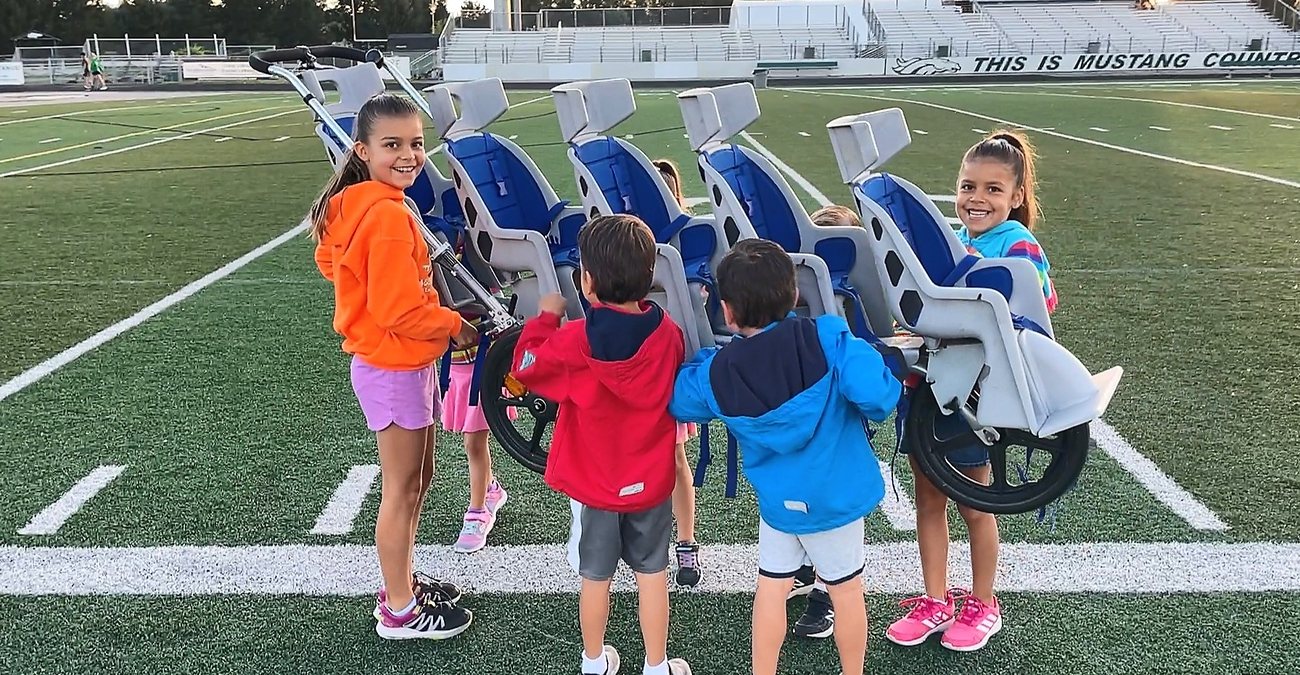
On July 29, 2023, I pushed 301 pounds of stroller and kids one kilometer around the track at Eagle High School in 5 minutes 34 seconds, and Guinness World Records certified it. Savannah rode in the front seat, then Preston, Noelle and Grayson, with Avery in the back holding an Anything Is Possible sign up over her head. Lincoln and Gabriella stood at the finish line holding the ribbon. Six cameras were running. Amy had one, Savannah had one, and I'd set up four more around the track, two of them old phones out of a drawer, because I didn't want a single step of it happening outside the frame.
I could have run it on any track I wanted. I picked that one on purpose.
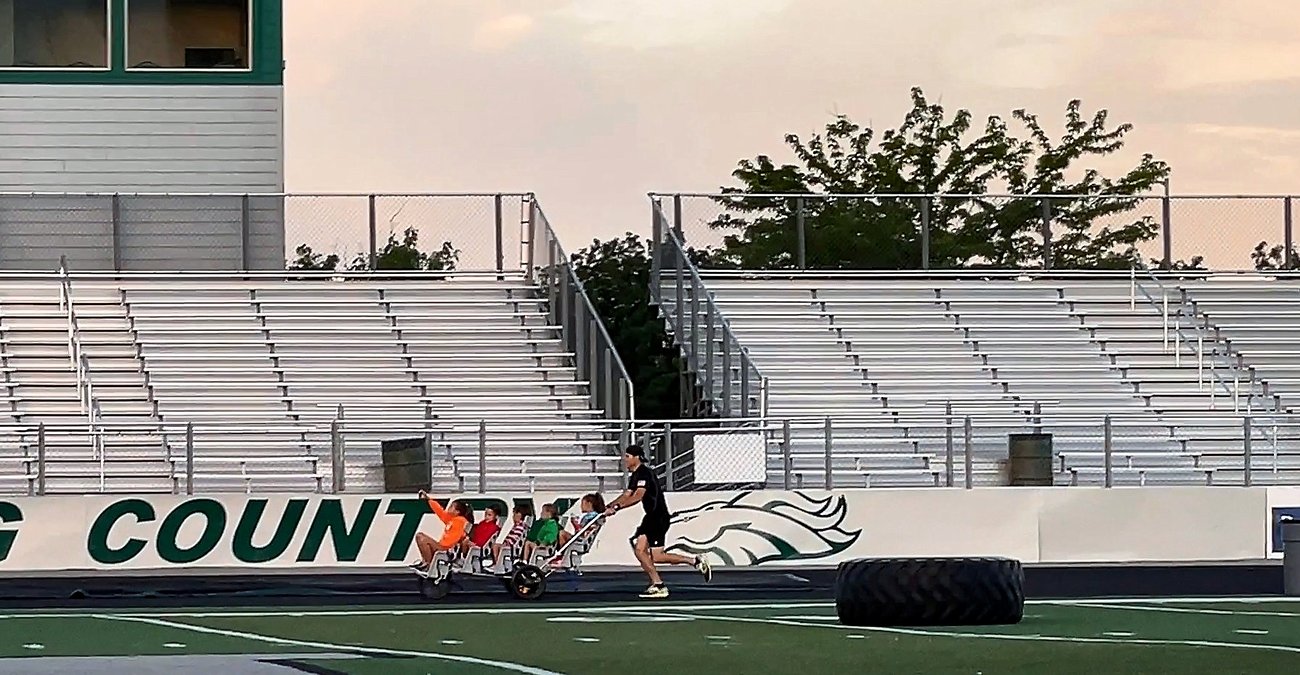
Why set a world record in Eagle, Idaho?
My first three records went to Modesto, Garden City and Oakland. None of those were an accident either. For my second marathon attempt I picked Oakland specifically because I wanted a record set near where I grew up, and then I missed the cutoff that day and ended up taking it a week later in Modesto, which is close to home but isn't home. That one bugged me for years, and it's most of the reason we loaded up the big van and drove back to California to set the half marathon record in Oakland in 2022, after we'd already moved to Idaho. My parents and my brothers were standing there. I wanted that city on a certificate.
Garden City is fifteen minutes from my front door, and it still isn't Eagle.
We moved here on May 12, 2019. None of us had ever set foot in Eagle before that day. The quintuplets were a year old, Amy drove the kids in the van, and I drove the moving truck with the Anything Is Possible sign beside me the whole way. Four years later Avery was holding that same sign up at the finish line.
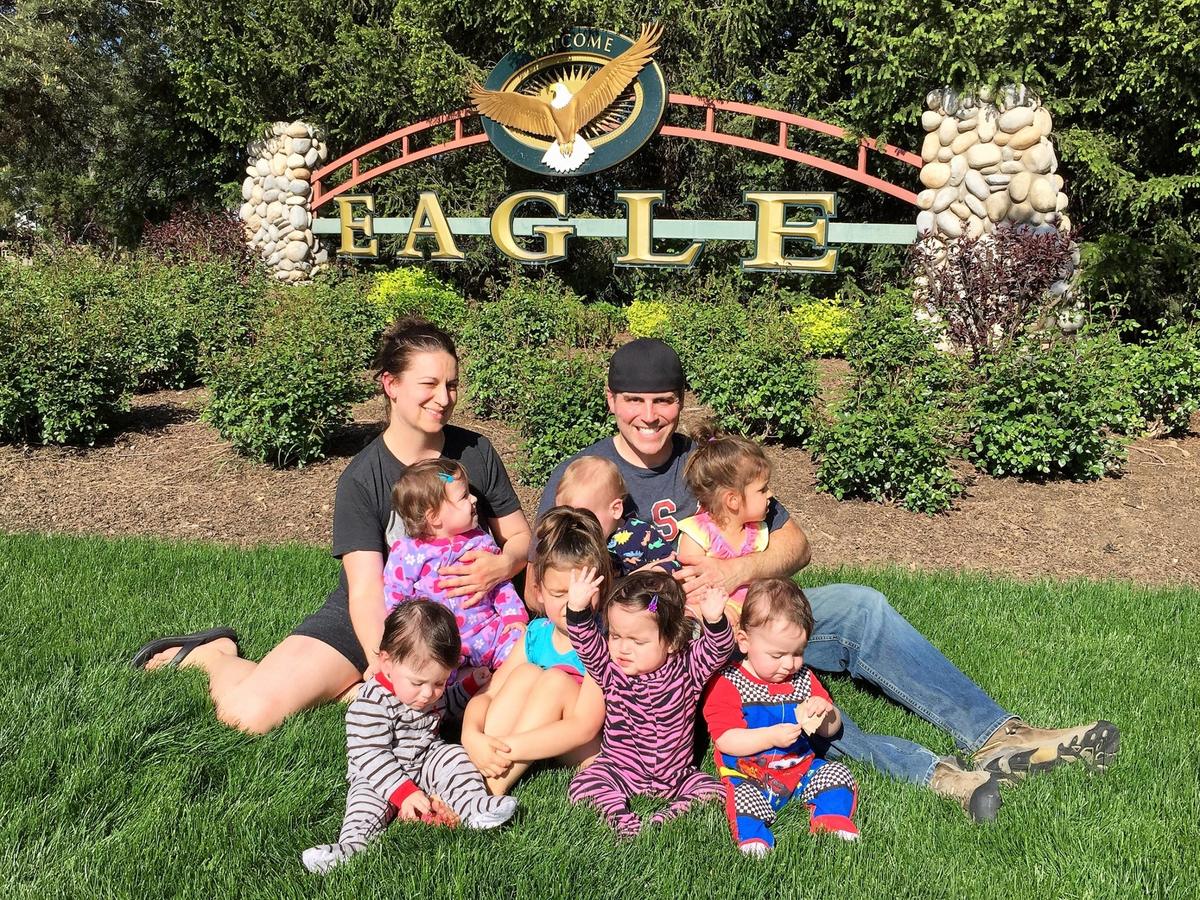
Two things made the 1K possible. The first came from my older kids, who had grown up hearing about these records and being told they were part of them, and who informed me one day, politely, that being part of it is not the same as being in it. They wanted a turn. I didn't have a good answer for that.
The second was paperwork. Other people had set track records by filming themselves, so I asked Guinness World Records whether I'd still need two independent witnesses standing there the way you do at a road race. They said no, as long as the video covered everything. That one email solved the hardest logistical problem I had, which was talking two adults into a Saturday morning, and it handed me something I'd never had on any other record. I could pick the track.
So I picked the one at the high school my kids will go to. I wanted them walking those halls someday able to say that a world record was set right out there when they were little, and that they were in it. That's the whole reason. A high school track in Idaho is not a more impressive venue than a marathon course in California. It's just ours.
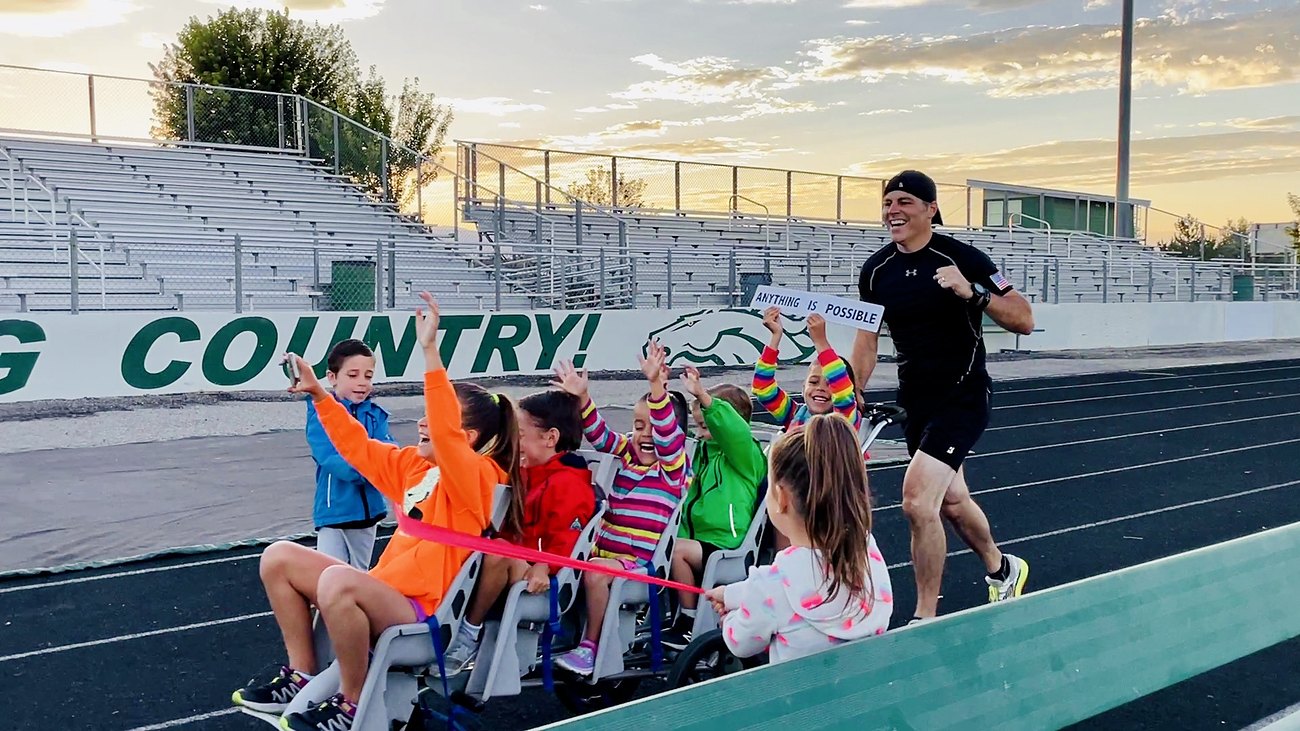
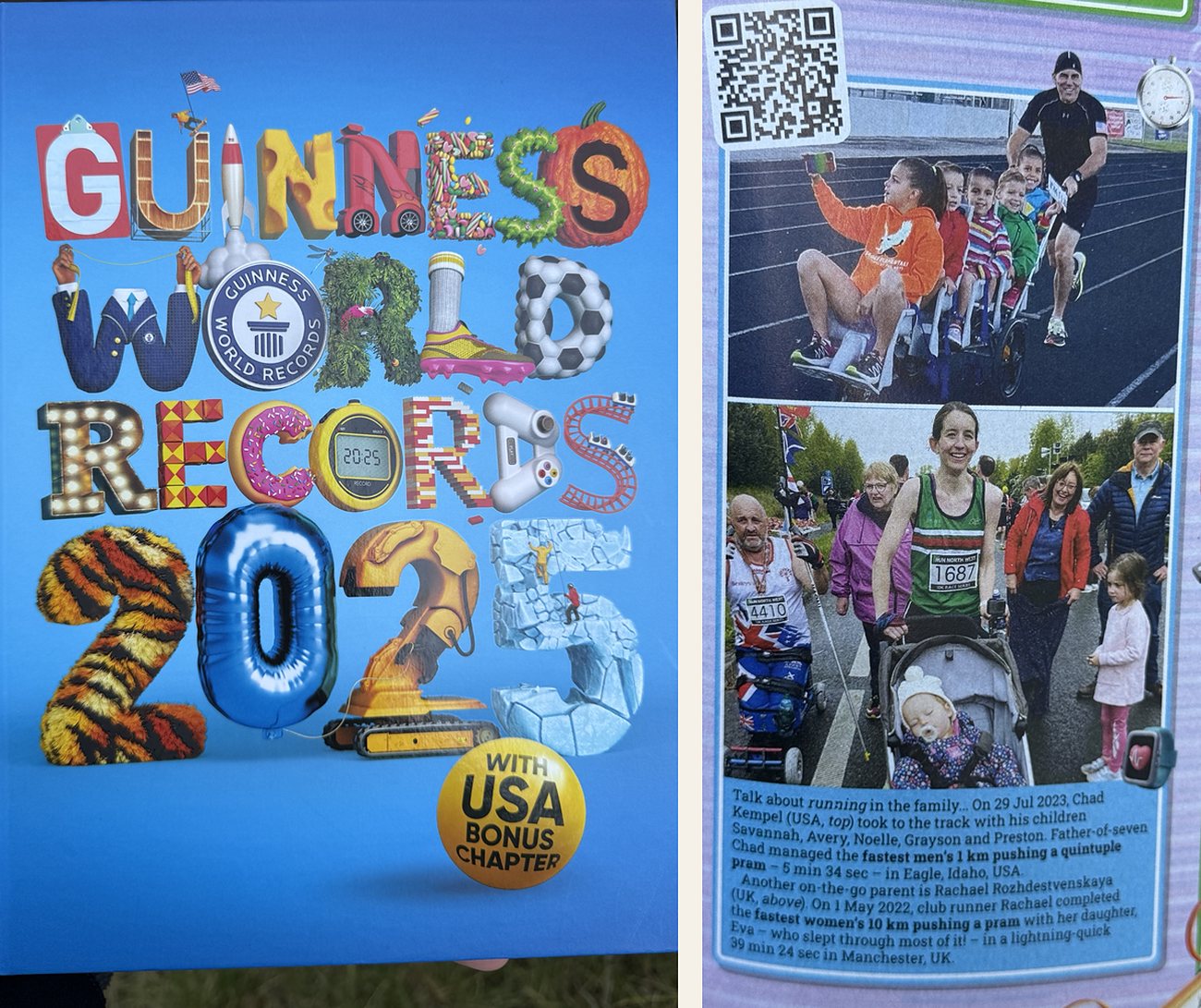
We drove over to look at it ahead of time, at the same hour we planned to run, right as the sun was coming up. That part was deliberate too.
What went wrong the first time?
Two weeks earlier, on July 14, 2023, I tried the exact same record at Eagle Middle School and didn't finish.
I love that track. It's steps off a sidewalk I run down all the time, and I'll hop the curb, do a couple of laps, and hop back off and keep going. Old red cinder, weeds coming up through it. I hope they never modernize it. But it's loose and it's thick, and pushing three wheels and 301 pounds through that stuff felt like running in sand. I got about a lap and a quarter in and I was finished. Couldn't breathe, couldn't hold the pace.
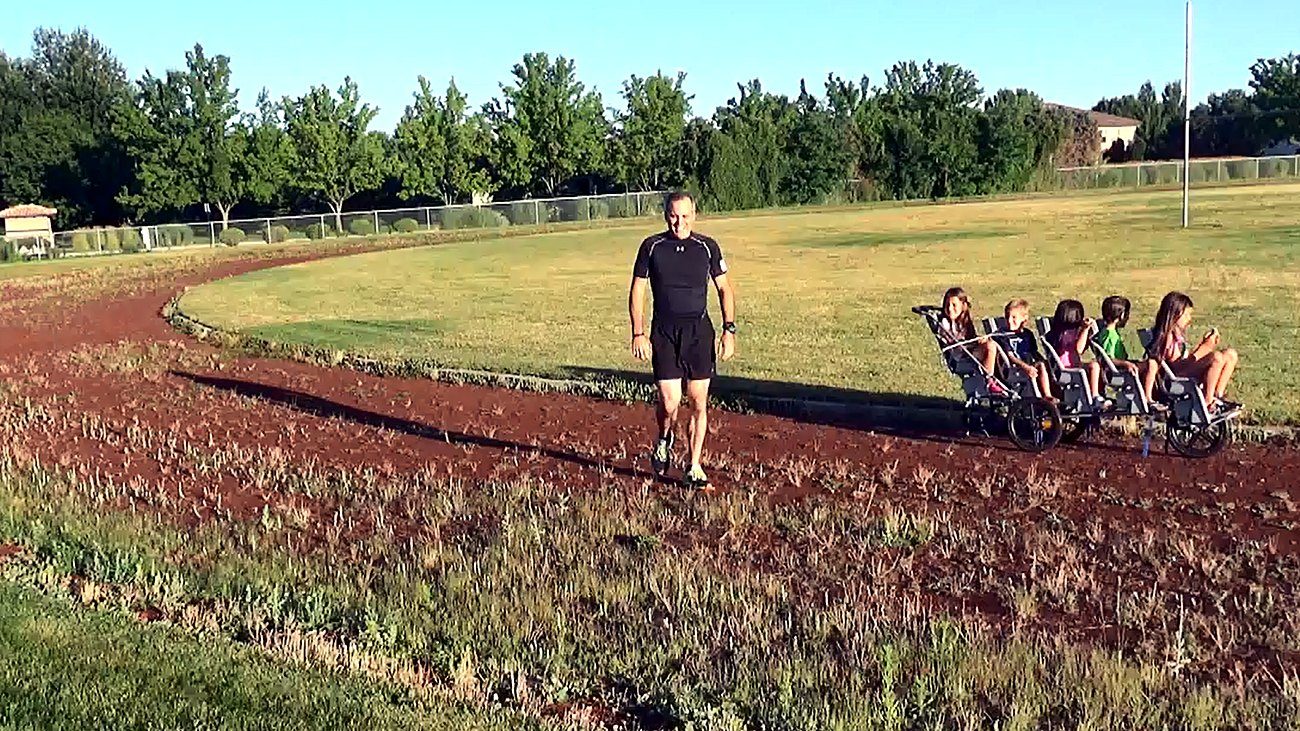
Two different things went wrong that morning, and they weren't the same kind of problem.
One was me. I wasn't in quite good enough shape yet. I was close, but I needed more speed work, and I spent the next two weeks getting it.
The other was the surface, and no amount of training was going to turn that cinder into something a loaded stroller could move across. That one needed a different answer. The answer turned out to be a few blocks away.
Why did we turn around near Shoshone Falls?
The one that mattered more than either of those came two years earlier.
On May 8, 2021, I went after a half marathon record at the Spirit of Magic Valley Half Marathon near Shoshone Falls. About a mile in, climbing hills I hadn't scouted, one of my kids started crying and said she wanted to go back to mom. My rule with that stroller has always been that if the kids aren't enjoying it, or they ask to stop, we stop. So we turned around and walked back to the start line.
I figured that was the end of the whole stroller thing, and by the time we got home I'd mostly made my peace with it.
Almost a year later I asked all of them straight up whether they wanted to keep doing this. Every one of them said yes, enthusiastically, so that March we went to Oakland and set the half marathon record.
Does naming the place actually help?
I've been doing a version of this for twenty years without knowing there was a term for it. The day before a marathon I go find the start line and stand on it. If I can drive the course, I drive the course. Then I run the whole thing in my head that night, so that the next morning at mile three I already know there's an overpass coming before mile four. The hill's the same size either way. I just know it's coming.
Peter Gollwitzer named this an implementation intention: a plan that spells out the exact when and where of an action instead of just the outcome you're after. Gollwitzer and Paschal Sheeran's 2006 meta-analysis pooled 94 independent tests with more than 8,000 participants and found a medium-to-large average effect on whether people actually reached their goals. A much bigger review followed in 2025, 642 tests, by Sheeran, Olivia Listrom and Gollwitzer. The effect held across thinking, feeling and behavior, and it was strongest with a true if-then format and when the plan had been rehearsed.
There's one thing it doesn't do. If-then planning closes the gap between wanting something and doing it. The wanting has to already be there, and the same review found smaller effects when it wasn't.
"I'm going to get in better shape" is a wish with a verb in it. "I'm running the Eagle High School track at six in the morning on July 29th" is a different animal. It has an hour and an address, and no room left to argue with yourself when the alarm goes off.
How do you tell which kind of failure it was?
The middle school morning taught me something I still use, and it comes out of research I taught in my psychology courses.
Bernard Weiner spent a career on what people do with an explanation after something goes wrong. His 1985 model sorts the causes three ways: inside us or outside us, permanent or temporary, in our control or not. A 2021 meta-analysis in Psychological Bulletin covering 43 studies and more than 15,000 participants found the core of that model holds up.
Most of us handle this badly, and we do it badly in one of two directions. Either it's all the circumstances, so there's nothing of ours to fix, or it's all us, so we're just not built for this and there's no point trying again. Both of those feel like honesty from the inside.
The move that works is boring. Split the causes and treat them differently. My conditioning was mine and it was temporary, so I trained. The cinder wasn't going anywhere, so I moved. If I'd mashed those together into "I'm not fast enough to do this," I'd have quit two weeks short of a world record and never known it.
My conditioning was mine, so I trained. The cinder wasn't, so I moved.
Students do this to themselves constantly with grades. A bad test gets filed under "I'm bad at math," when the actual causes might be a chapter nobody studied and five hours of sleep. Two problems, two fixes, and neither one is a personality trait. The day after a failure is when you sort that out.
How can teachers use this?
Hand a kid who just bombed something a sheet of paper with two columns on it. One column is what was me. The other is what was the setting. Make them fill in both sides before they say a word about what kind of student they are.
Then do the same thing with the next goal, in reverse. Not "study more for the next one." A day, an hour, a room, and which subject comes first. Shasta taught me what to do when somebody tells you a goal is a bad idea. This one is about what to do once you've decided to go anyway.
Why did I take my shoes off?
When I crossed the line I took my running shoes off and set them down on the track.
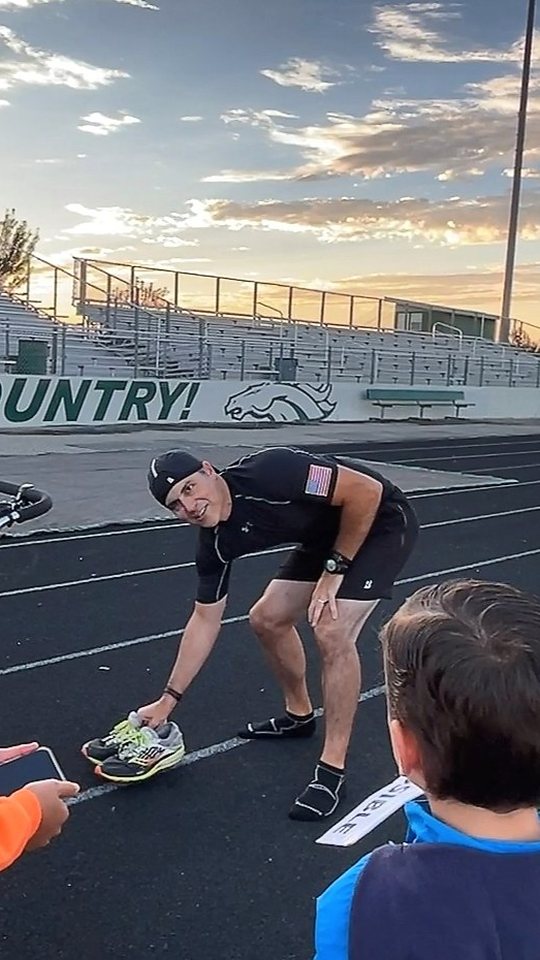
I'd known for a while that this was the last one. The kids were getting too big for that stroller, which is exactly how it's supposed to go, and I wanted the ending to happen on purpose instead of thinning out the way most things do. I never ran in those shoes again. They're at the Guinness World Records museum in Copenhagen with the stroller and my "Anything Is Possible" sign.
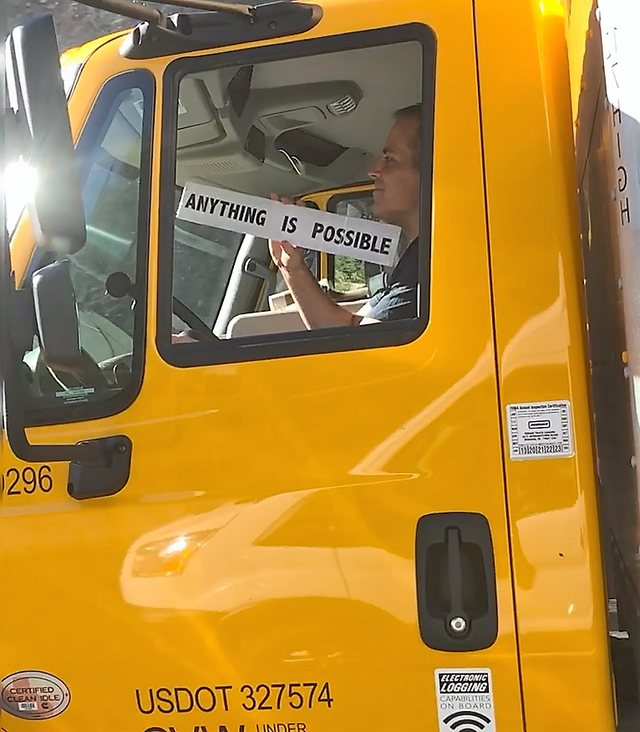
Five thirty-four isn't untouchable. It's a good pace with 301 pounds in front of you, but somebody will come along and beat it, and when they do I hope they get a morning like the one we got. The part I care about is already finished. It happened here in our town, Eagle, Idaho, with all seven kids on that track.
Try this
Put an hour and an address on it. Not "I'll start running." The Greenbelt, Tuesday, six a.m. Say it out loud to one person.
Go stand there first. Same spot, same hour, before the day that counts. You'll learn something you can't get from thinking about it at your desk.
After it goes wrong, make two columns. What was me. What was the setting. Be honest on both sides.
Train for the first column. Change the second one. Those need opposite answers. Mixing them up is how people quit.
Pick the version that means something to you, not the version that sounds good when you say it out loud.
Two adults came through the gate partway through and started walking laps while we did it. They had no idea. Somebody was setting a world record on the same track, in a town where "nothing ever happens."
Keep the Warning, Question the Verdict →
More from Insights
Sources
- Guinness World Records. Fastest 1 km pushing a quintuple pram (male): 5 min 34 sec, Chad Kempel, Eagle, Idaho, 29 July 2023.
- Guinness World Records (November 2023). Super dad says his family encouraged him to break pram pushing record.
- Gollwitzer, P. M., & Sheeran, P. (2006). Implementation intentions and goal achievement: A meta-analysis of effects and processes. Advances in Experimental Social Psychology, 38, 69–119.
- Sheeran, P., Listrom, O., & Gollwitzer, P. M. (2025). The when and how of planning: Meta-analysis of the scope and components of implementation intentions in 642 tests. European Review of Social Psychology, 36(1), 162–194.
- Weiner, B. (1985). An attributional theory of achievement motivation and emotion. Psychological Review, 92(4), 548–573.
- Brun, L., Pansu, P., & Dompnier, B. (2021). The role of causal attributions in determining behavioral consequences: A meta-analysis from an intrapersonal attributional perspective in achievement contexts. Psychological Bulletin, 147(7), 701–718.
From Insights by Chad Kempel. Read it online at chadkempel.com/insights/eagle-idaho-world-record/
Get the free 10-principle guide.
Subscribe and get Anything Is Possible Was Never the End of the Sentence: 10 principles pulled from real moments, for anyone still figuring it out. Then one email when a new Insights article goes up. Unsubscribe anytime.
Just want the guide? It’s $1, no email needed.