How do you keep working on a goal you might not see finished?
Cut the goal into pieces you can finish this week, and do it for one specific person, by name. When you want to quit, that person is who you think about. My father lived this way his whole life and never explained it once. The research on small steps and on working for someone else says he had it right.
Howdy.
That's how my father started every conversation. My brother pointed out he was probably the last person on Earth still saying it. He ended every one with "Take it easy."
At 1:03 in the morning on December 5, 2022, 192 laser beams in Livermore, California fired 2.05 megajoules of energy at a fuel capsule the size of a peppercorn. The capsule gave back 3.15. For the first time in history, a fusion reaction in a lab produced more energy than the laser put into it. People had been trying for about sixty years.
My dad had been gone ten weeks.
He would have texted me the article before I was out of bed. He spent six years as the architect who ran the design of the buildings the fusion laser lives in. I didn't put it together until I sat down to write this that the one thing I'm known for saying was his line first.
Who was he?
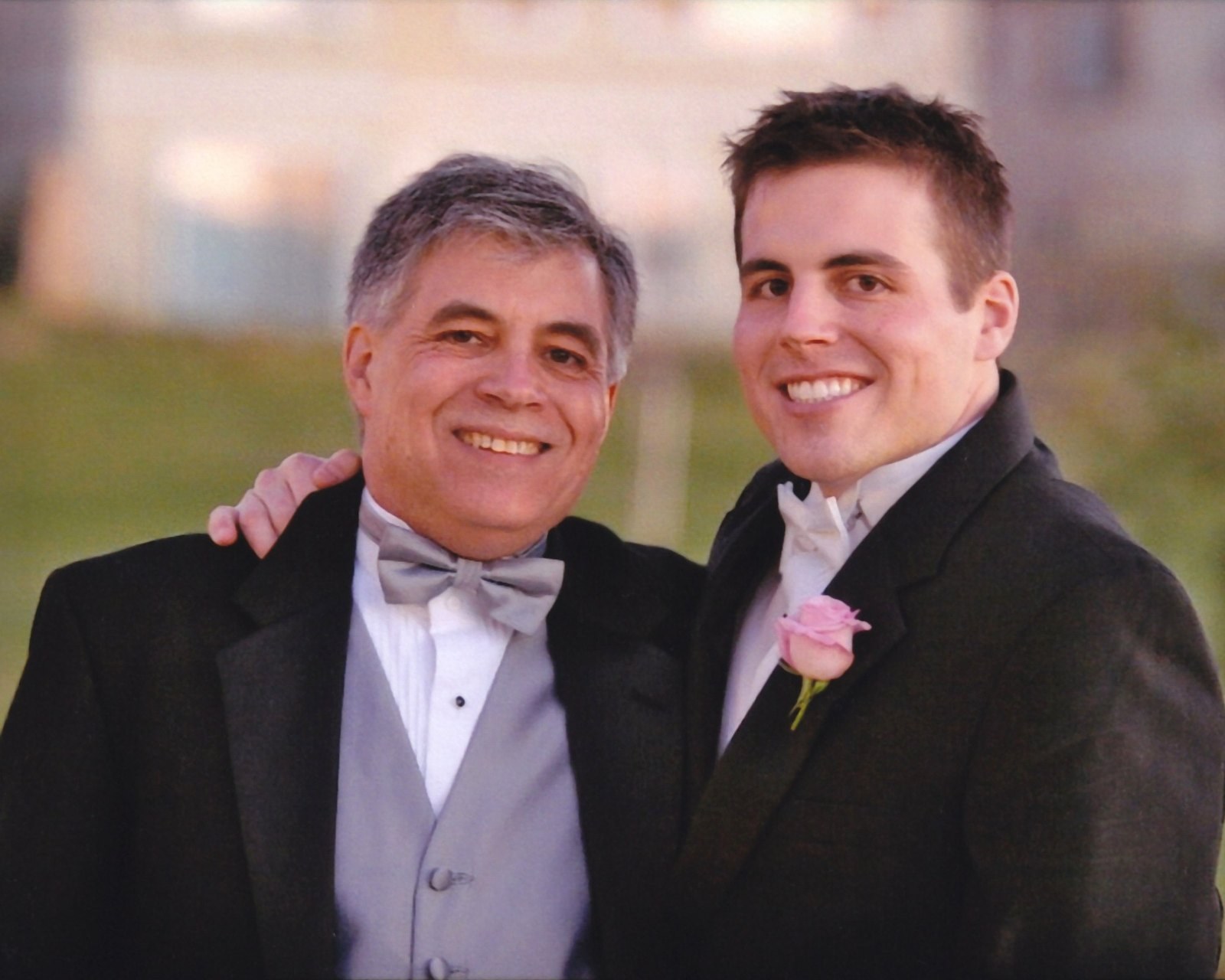
Paul Kempel didn't always do great academically in high school. I know because I found one of his report cards as an adult and asked him how a kid with those grades got into UC Berkeley. He did well at community college, applied to transfer, and got a rejection letter. So he took the return address off the envelope and wrote Berkeley back explaining, in so many words, that they'd made a mistake. He started that semester and graduated with honors in architecture in 1977 and went on to become a licensed architect. "Go Bears," he'd say.
In 1996, fifteen years into his career at Lawrence Livermore National Laboratory, he became the design manager for the buildings of the National Ignition Facility: 192 laser beams spread across an area the size of three football fields, built for physics nobody had proven yet. When the buildings were done in 2001, a Lab reporter asked him about it. He compared it to Kennedy promising the moon before the technology existed. My father's words: "If you need the technology, you develop it so you can achieve your goals."
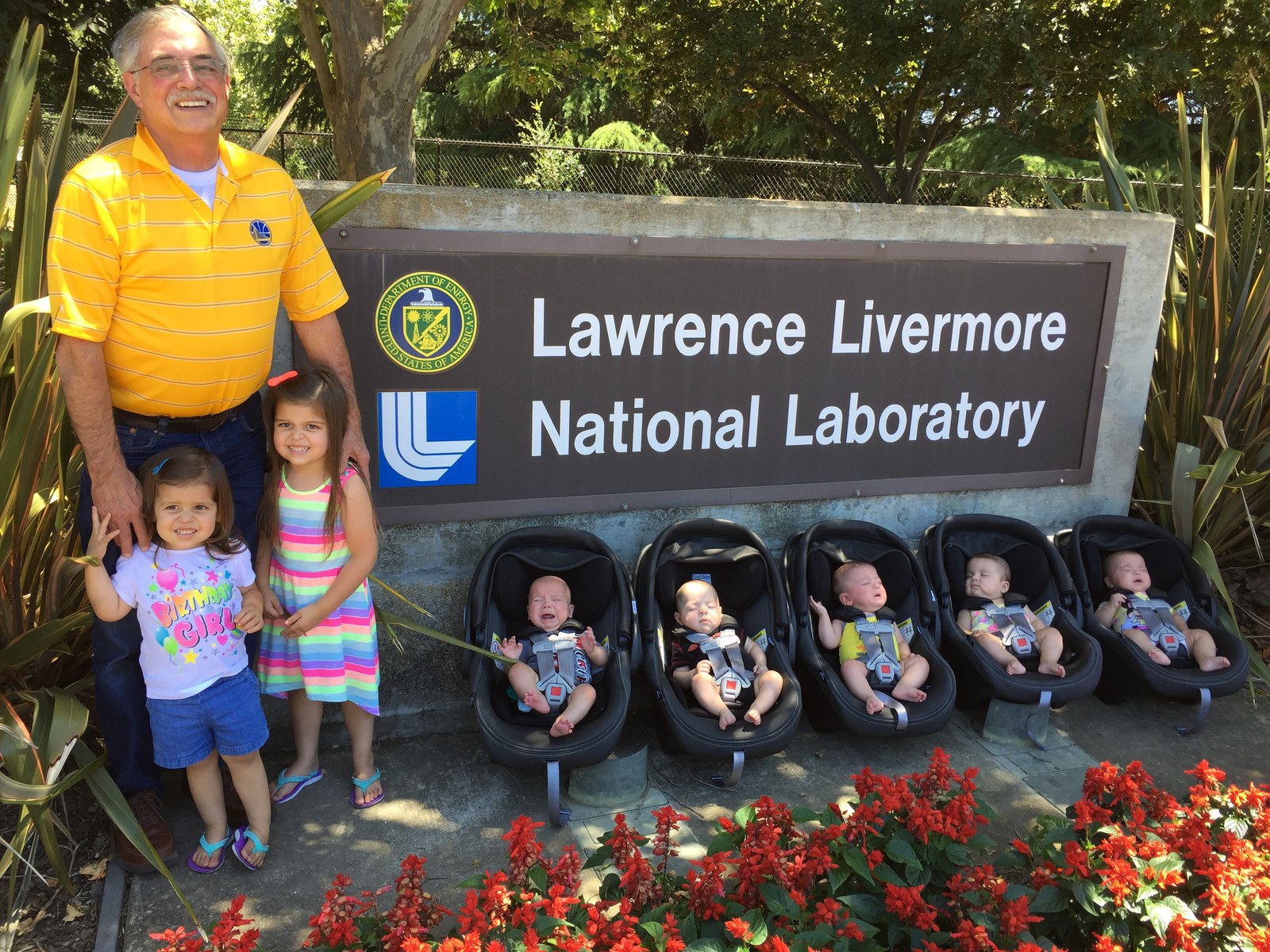
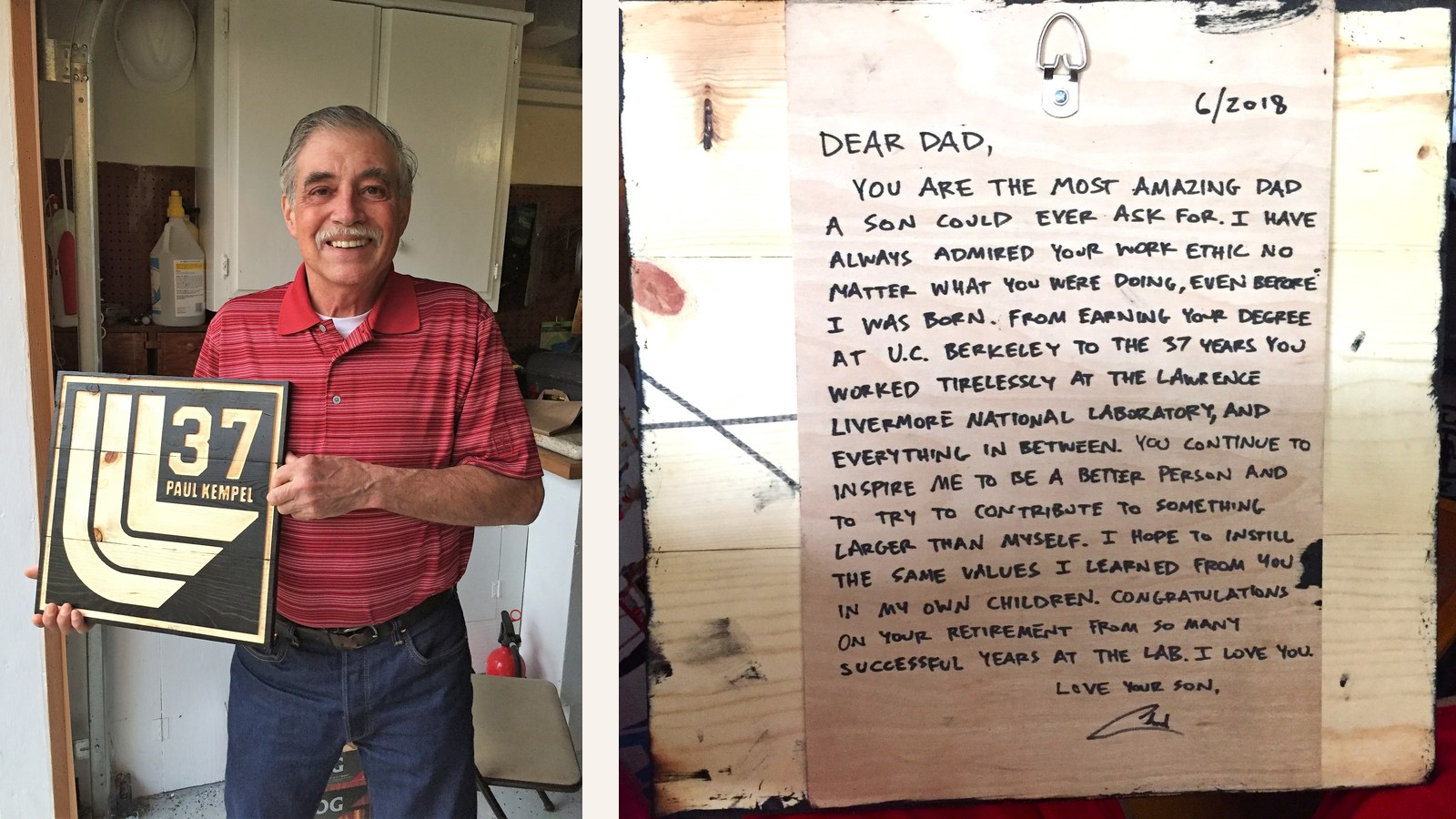
Then the doubters got their turn. The laser missed its 2012 ignition deadline, and by 2016 the Department of Energy was saying in public that the $3.5 billion machine might never work. My father retired in 2018. It still hadn't.
What did he actually teach me?
Not with words. In 2017 I asked him to sit for a long interview on video. He picked the location: Alcatraz. We walked past a couple of no trespassing signs and set up in an old tunnel at the top of the island, next to a helicopter pad. Of course, Dad. He told me that when he was six or seven, a church a block from his house burned down and left piles of bricks. He took his wagon and a hatchet down there and sat all day chopping the mortar off, one brick at a time, then sold them to the neighbors for a penny apiece. Fifty bricks a day. "I was rich," he said.
Fifty years later, in the middle of one of his remodels, he showed me that you could tear down an entire house and get rid of it in the weekly garbage bin. The concrete foundation too. Piece by piece, week after week, for free. NIF got built the same way, in seven construction packages, each one a job somebody could actually finish.
I never got a lecture about goals. I got a wagon and a hatchet. If you're sixteen and your goal looks like a pile of bricks, that's the whole method.
Why do small pieces work?
I taught statistics at San Jose State University for five years and never once thought of the bricks as a study. Then I read Bandura and Schunk (1981). They took kids between seven and ten who were far behind in math and disliked it, and gave them subtraction pages to work through on their own over seven sessions. One group was told to finish a set number of pages each session. Another was given the same total, due at the end. A third got no goal at all. The kids working session by session finished more, scored higher, believed they were better at math, and were the only group that started doing subtraction when they didn't have to. Same pages. The only difference was the size of the piece in front of them.
A goal you can't finish this week isn't a goal yet.
Where did the sign come from?
Before any of this, I tried to swim from Alcatraz to San Francisco three times and failed all three. More on that in a future post. My father came to watch every one.
Around 2010 my parents sat my brothers and me down and told us he had leukemia. He'd known for about ten years and carried it quietly until treatment couldn't wait. I signed up with the Leukemia & Lymphoma Society's Team in Training that year, raised $10,355 for patient care and research, and entered Ironman Canada in Penticton, British Columbia. A 2.4-mile swim, a 112-mile bike ride, and a full marathon, all in one day.
When I told him, he laughed. "But you can't swim from Alcatraz, which is a mile and a half, so how are you gonna do 2.4?" I told him he'd see. Partway through training I went back out to Alcatraz and made that swim to San Francisco twice. Maybe that's why he picked that island for his interview six years later. I'll never know.
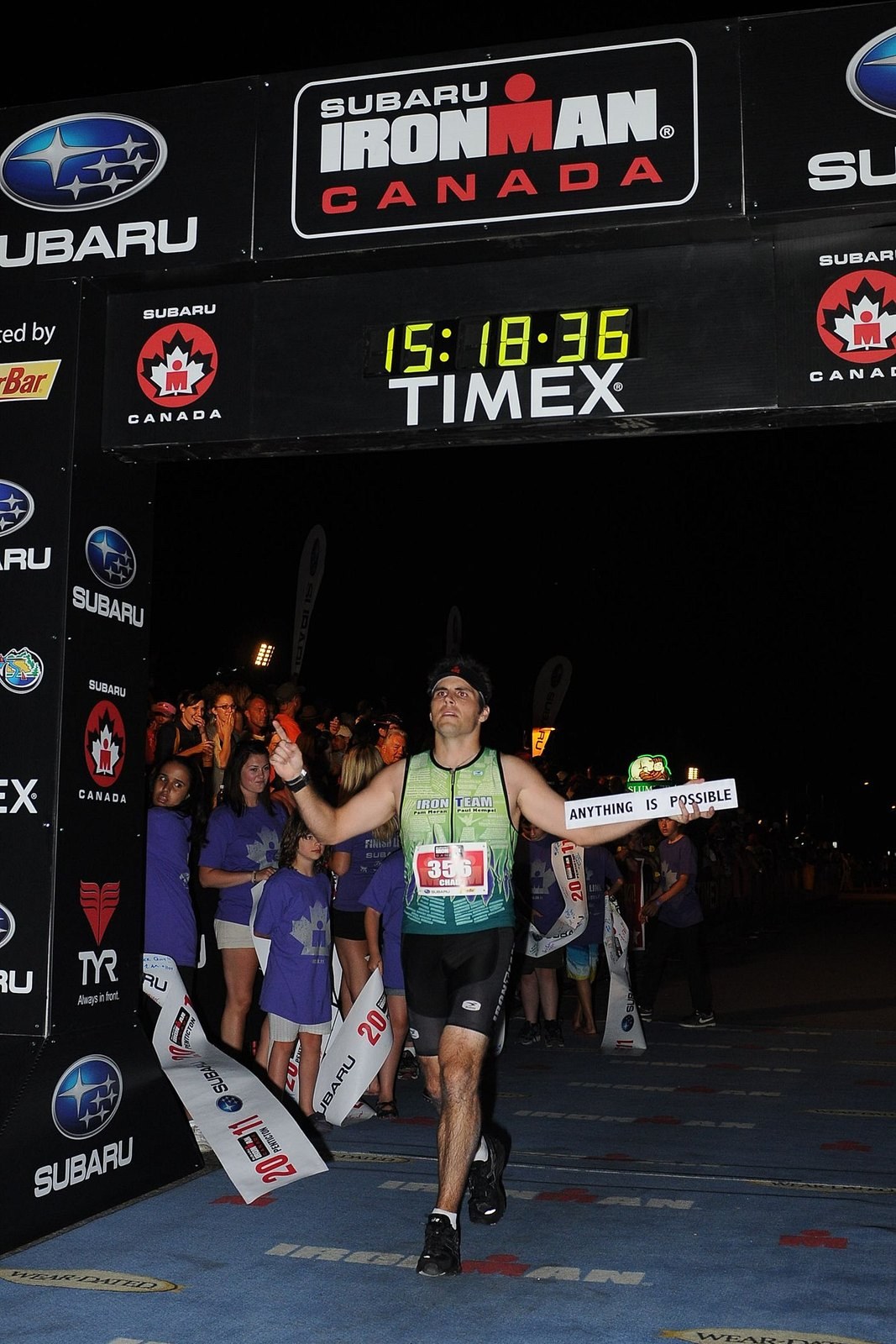
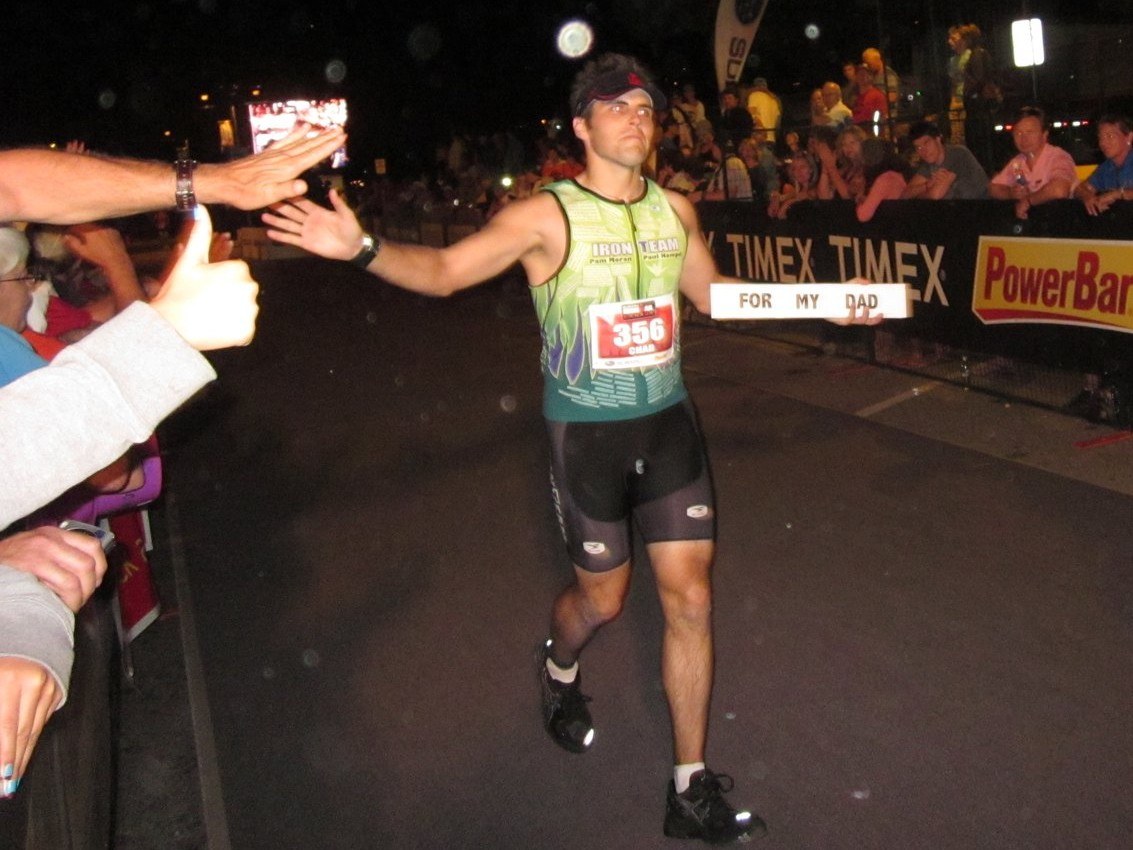
He was the original anything-is-possible guy. He'd also just been told he had cancer, and in a stretch like that everybody forgets their own line. Sometimes the people around you have to hand it back. So I printed two lines on paper and taped them to a strip of cardboard. One side said ANYTHING IS POSSIBLE. The other side said FOR MY DAD. My whole family made the trip to Penticton: my parents, both my brothers and Amy. She hid the sign until the last mile, then handed it to me, and I ran the finish flipping it back and forth. 15:18:36. He was standing there watching it come in.
Why does a goal for someone else last longer?
Adam Grant and his colleagues ran a study in 2007 with university fundraisers, the people who call alumni asking for money. One group spent ten minutes with a single student whose scholarship their calls paid for. That's all. A month later, those callers had more than doubled their time on the phone each week and were raising close to three times as much money. The callers who only read a letter from a student, and the ones who got nothing, hadn't changed.
Ten minutes with the person the goal was for, and it was still working a month later. That's the back of the sign. Who's yours for?
What happened after?
The sign came out for every Guinness World Records attempt with my kids, with white paper taped over FOR MY DAD because those days belonged to them. On March 14, 2022, at 69, my father started guitar lessons with my brother Steven. He had a stroke one month later. On June 7 I sent him a video. I held the sign up and, for the first time since Penticton, peeled the white paper off. The sign is in the Guinness World Records museum in Copenhagen now, next to the stroller.
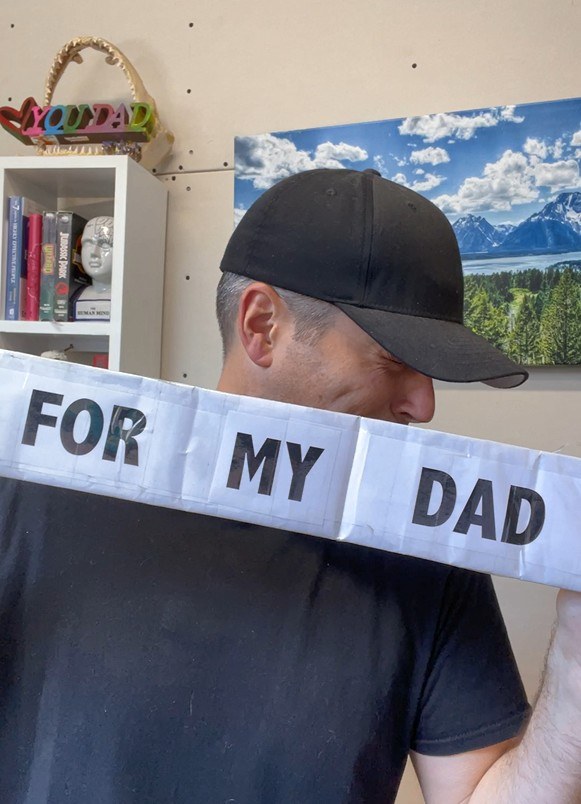
He died at home on September 24, 2022. Ten weeks later the laser in his buildings did the thing a lot of smart people said it might never do. It's done it nine more times since. I read every article. I read them for him.
Try this
Write the goal on the front of a card. Under it, write the one piece of it you can finish by Sunday. Not the plan. One brick.
Next to the goal, write who it's for. A name, not a cause. If the goal is only for you, borrow someone: the person who'll be around when it pays off.
Spend ten minutes with that person. Tell them what you're doing and why. The fundraisers didn't need more than that.
When you want to quit, read the name first. Then do the next brick.
Parents and teachers: finish something in front of them. That's the lesson that sticks.
How can teachers use this?
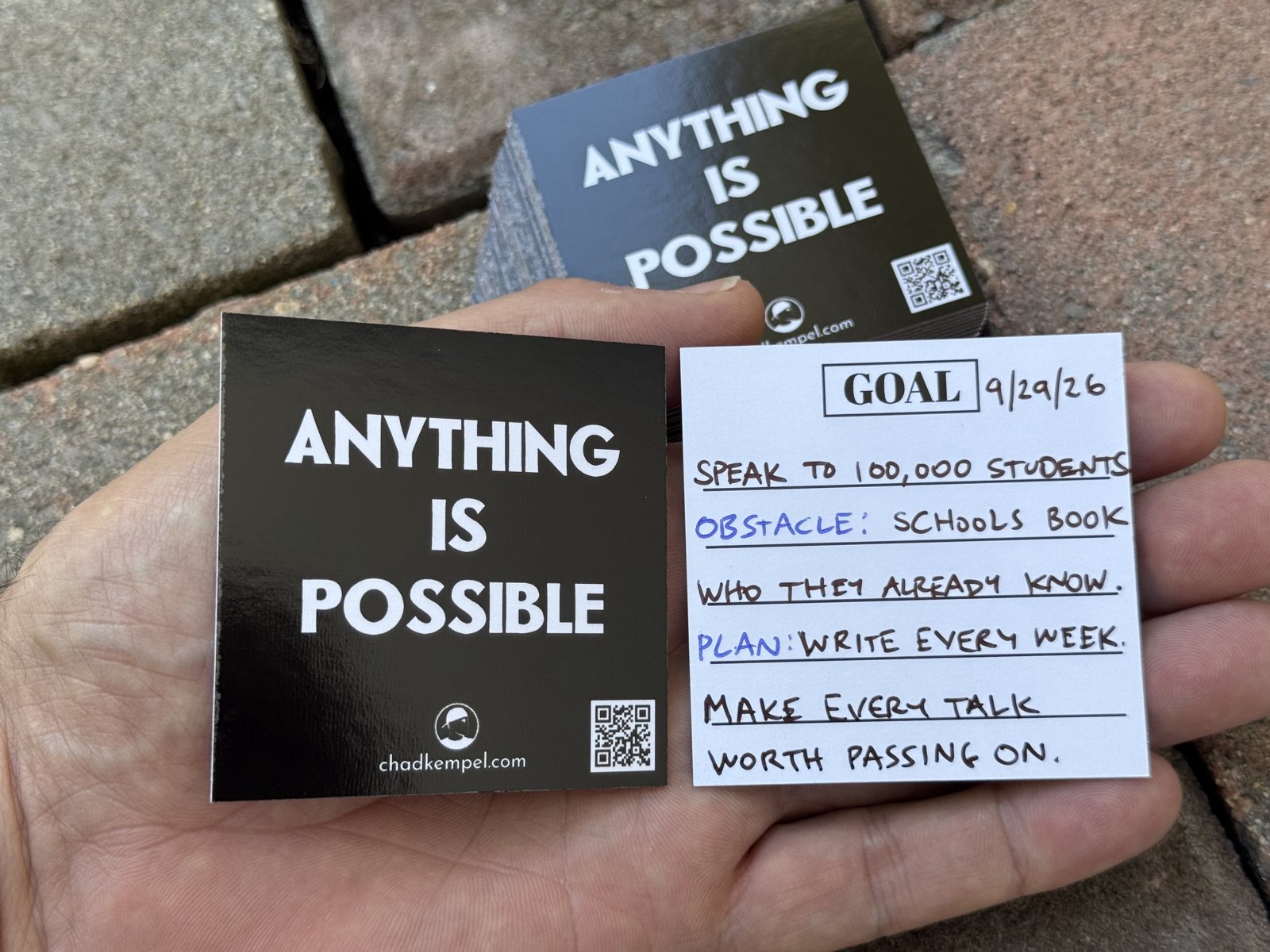
The goal cards I hand out at my talks have Anything Is Possible on the front and blank lines on the back. In class, have students write the goal on the first line, the first piece under it, and the name of the person it's for right next to the goal. Five minutes at the start of one period.
What do you do with the articles?
Grief researchers have a term for keeping a relationship going with someone after they die, in whatever form is left. They call it a continuing bond, and the research says it's a normal, mostly healthy part of grieving as long as it's the kind that moves you forward. Reading fusion news for a man who can't read it anymore is my version.
Somewhere there's a person you'd want to send the article to. Put their name next to the goal.
Take it easy.
Keep the Warning, Question the Verdict →
More from Insights
Sources
- Bandura, A., & Schunk, D. H. (1981). Cultivating competence, self-efficacy, and intrinsic interest through proximal self-motivation. Journal of Personality and Social Psychology, 41(3), 586–598.
- Grant, A. M., Campbell, E. M., Chen, G., Cottone, K., Lapedis, D., & Lee, K. (2007). Impact and the art of motivation maintenance: The effects of contact with beneficiaries on persistence behavior. Organizational Behavior and Human Decision Processes, 103(1), 53–67.
- Stroebe, M., Schut, H., & Boerner, K. (2010). Continuing bonds in adaptation to bereavement: Toward theoretical integration. Clinical Psychology Review, 30(2), 259–268.
- Lawrence Livermore National Laboratory (October 26, 2001). NIF conventional facility complete. Names Paul Kempel as NIF Conventional Facilities Design Manager and includes the quote used above.
- Kempel, P., & Hands, J. (1996). National Ignition Facility subsystem design requirements: NIF site improvements, SSDR 1.2.1. Lawrence Livermore National Laboratory, UCRL-ID-126995. OSTI 595031.
- Kempel, P., & Hands, J. (1996). National Ignition Facility subsystem design requirements: Laser and target area building (LTAB), SSDR 1.2.2.1. Lawrence Livermore National Laboratory. OSTI 595008.
- Kempel, P., & Hands, J. (1996). National Ignition Facility subsystem design requirements: Optics assembly building (OAB), SSDR 1.2.2.3. Lawrence Livermore National Laboratory. OSTI 595101.
- Lawrence Livermore National Laboratory (2022). In Memoriam: Paul Kempel.
- Physics Today (October 1, 2012). Ignition effort may be slowed as Livermore facility misses milestone.
- American Institute of Physics, FYI (June 20, 2016). National Ignition Facility may never ignite, DOE admits.
- Lawrence Livermore National Laboratory (December 2022). National Ignition Facility achieves fusion ignition.
- Lawrence Livermore National Laboratory. NIF sets power and energy records (ignition milestones through 2025).
- Science (December 2022). With historic explosion, a long sought fusion breakthrough.
- TIME. Nuclear fusion at the National Ignition Facility.
From Insights by Chad Kempel. Read it online at chadkempel.com/insights/for-my-dad/
Get the free 10-principle guide.
Subscribe and get Anything Is Possible Was Never the End of the Sentence: 10 principles pulled from real moments, for anyone still figuring it out. Then one email when a new Insights article goes up. Unsubscribe anytime.
Just want the guide? It’s $1, no email needed.