Content note: This post is about a friend who died by suicide. If you're struggling right now, call or text 988 or chat at 988lifeline.org. It's free and open 24/7.
How can you help a friend you've drifted away from?
Send a short message that asks for nothing back. In a five-year study, people who got brief, no-strings letters after a mental health crisis had a lower suicide rate than people who got none. If a reply worries you, ask directly and bring in a trusted adult or 988.
I was at a Godsmack concert when the band slowed things down for "Under Your Scars," a song about the pain people hide, and talked about depression and suicide. The screen behind them showed singers the music world has lost. Then it showed a website for the Scars Foundation, the mental health nonprofit the band's singer started in 2019.

I stood there thinking about my friend. I'll call him Marco. That's not his real name.
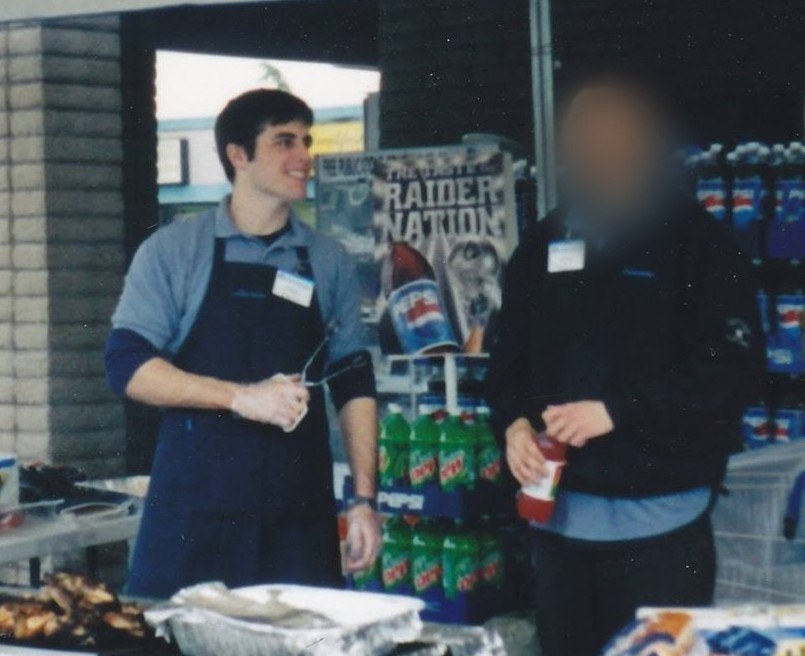
We worked together at a grocery store in Castro Valley, California, for at least five years. We used to go to karaoke nights at the bowling alley. He never sang once. He came anyway. One year we went up to Tahoe to snowboard and ride gas scooters around. I loved that trip.

Marco grew up with struggles I never had to deal with. He was still funny, and he cared about people. He also struggled with drugs, and he knew it, so he joined the military to get clean. It worked. Then he got out and went back to using.
Somewhere in there, life pulled us different directions. We never had a falling out. We just drifted. A mutual friend kept me posted, but I hadn't talked to Marco myself in years.
In September 2012, an old coworker messaged me that Marco was in trouble. Hours later I learned he had died by suicide. He was 29. He left behind a wife and kids. His kids are growing up without their dad. I think about that a lot.
Addiction was a big part of it. So was losing the structure that had held him together. There's plenty I'll never know. Suicide almost never comes down to one thing.
From the outside, I couldn't understand it. Psychologist Edwin Shneidman, who spent his career studying suicide, called it constriction. In a crisis, a person's thinking narrows until only one way out seems to exist. The other options are still there. They just can't see them. That state doesn't last forever, which is why help in the middle of it matters.
I wish I could have said something to convince him his life was worth continuing for.
Can a short message really make a difference?
Research says it can. Starting in 1969, psychiatrist Jerome Motto followed 843 people in San Francisco who had been hospitalized for depression or suicidal thoughts and then turned down further treatment. One group, chosen at random, got nothing. The other got short letters from hospital staff for five years. The letters asked for nothing. They basically said, we're thinking about you.
The letter group had a lower suicide rate over those five years, with the biggest gap in the first two. Some wrote back to say how much the notes meant. Later studies have been more mixed, and those letters came from staff, not old friends. Nobody can promise a text will save a life. Still, for people at their lowest, being remembered with nothing asked in return made a real difference.
So I check in on people more now, even the ones I've drifted away from.
Try this
Send one message today. Pick someone you used to be close to. One line is enough: "Saw something that reminded me of you. How've you been?"
Ask for nothing, and do it again. Don't make them explain where they've been. Check in again next month.
If the reply worries you, ask directly. "Are you thinking about suicide?" A 2014 research review found no evidence that asking puts the idea in someone's head.
Don't keep it a secret. If they ask you not to tell anyone, don't promise. Say, "I care about you too much to keep this to myself."
Bring in help. Tell a parent, a counselor, or a teacher you trust, or call or text 988 together. If they're in danger right now, call 911 and stay with them if it's safe.
How can schools support students after a friend dies by suicide?
After a suicide, schools focus on the student's closest friends, and they should. Look further out too, at the old teammate or the kid who used to sit with them at lunch. Students who drifted from someone may not feel they have the right to grieve, and they're easy to miss.
Have a plan before you need one. After a Suicide: A Toolkit for Schools, a free guide from the American Foundation for Suicide Prevention and the Suicide Prevention Resource Center, covers helping students cope, reaching parents, memorials, and how to talk about a death without raising the risk for other students.
Then teach the check-in habit before anything happens. It's part of my mental health assembly for high schools, and it works best when counselors follow up in classrooms and small groups.
I'll never know if a message from me would have changed anything for Marco.
If you've lost someone this way and keep asking what you missed, that question is part of grief. It doesn't mean it was your fault. Talk to someone. Carrying it alone makes it heavier.
And if you're the one who's drifted and things feel dark, don't wait for someone to check on you. Reach out first. A friend, a parent, a counselor, 988. People come through this.
Everyone else: someone you used to be close to probably crossed your mind while you read this. Send them something today.
If you're struggling
Call or text 988, or chat at 988lifeline.org. It's free, it's open 24/7, and it works anywhere in the United States.
If someone is in immediate danger, call 911.
You Don't Need a Best Friend to Belong Somewhere →
More from Insights
Sources
- Motto, J. A., & Bostrom, A. G. (2001). A randomized controlled trial of postcrisis suicide prevention. Psychiatric Services, 52(6), 828–833.
- Dazzi, T., Gribble, R., Wessely, S., & Fear, N. T. (2014). Does asking about suicide and related behaviours induce suicidal ideation? What is the evidence? Psychological Medicine, 44(16), 3361–3363.
- Shneidman, E. S. (1996). The suicidal mind. Oxford University Press.
- American Foundation for Suicide Prevention & Suicide Prevention Resource Center. (2018). After a Suicide: A Toolkit for Schools (2nd ed.).
From Insights by Chad Kempel. Read it online at chadkempel.com/insights/losing-a-friend-to-suicide/
Get the free 10-principle guide.
Subscribe and get Anything Is Possible Was Never the End of the Sentence: 10 principles pulled from real moments, for anyone still figuring it out. Then one email when a new Insights article goes up. Unsubscribe anytime.