Why do I need to learn this?
The best reason to learn something hard usually isn't the one adults give you. In one study, students who connected their schoolwork to helping other people stuck with boring work longer and got better math and science grades. Wanting a fun or interesting career didn't reliably do that on its own.
My kids are 8 to 11, and they already ask it over their math homework. Why do I need to know this? The best answer I've got came from a room full of men in San Quentin who had every reason not to care.
It's dark and drizzling the first time I drive out to San Quentin State Prison. This is back when it was still a maximum security state prison. The stone walls are about 20 feet high, with guard towers and barbed wire all around, and walking up to them I honestly feel like I've stepped into The Shawshank Redemption. I follow two other volunteers through the big rusted iron gates, where a guard pats us down and runs a metal detector wand over each of us. Then we head across the yard, past buildings that look like they've been standing there forever.
When we round the corner into the courtyard, there are dozens of men out there, maybe a hundred, in prison blue denim with bright yellow letters across the back that read CDC PRISONER, a lot of them in yellow raincoats, standing around under the basketball hoops and pull-up bars waiting for evening classes. Some look 18. A few have to be 75 or 80. As we walk toward them, heads turn.
I've never been inside a prison, and everything I know comes from TV, which only ever shows you the worst of the worst. So I'm bracing for that. Instead the two other volunteer teachers I'm with start shaking hands with the inmates, somebody asks about a homework problem, somebody else wants to know which classes start tonight, and within a couple of minutes it sounds like the hallway outside any college classroom.
That lasts until I see where we're teaching. It's the old laundry room, dark inside, still full of dark green industrial machines that were abandoned years ago and left to rust, with about 25 old wooden school desks set up in the middle.
We get through the lesson and the men start working problems. I'm at a table facing the wall, helping one of them, when I hear someone get up and walk over behind me. There's an electric pencil sharpener on the end of my table, maybe five feet away. He sharpens a pencil, then another, then another, and the whole time I'm sitting there with my back to a man I know nothing about, wondering which one of those pencils is going to end up in me. For a split second I freeze, and I can feel my breathing change and my heart rate pick up.
He finishes, walks back to his desk, and goes back to work.
Nothing ever happened, that night or in the five years I taught there with the Prison University Project. The men were polite and hungry to learn, always after one more trick for solving a problem, and every time I left they thanked me for making the long drive out and wished me a safe drive home. Most of them never talked about why they were there. A couple did tell me why they were in class, though, and it was for their families and their kids.
I got to see a couple of graduations while I was there. Men earned everything from GEDs to associate degrees, and they got up and gave their speeches as happy as I've ever seen anybody. Then they kept right on signing up for every class offered. A few went on to calculus, which is further than I ever went in math. Some of them knew they'd probably never walk back out through those gates, so whatever calculus was going to do for them, it wasn't going to get them a better job. They took it anyway, and they were proud of those degrees.
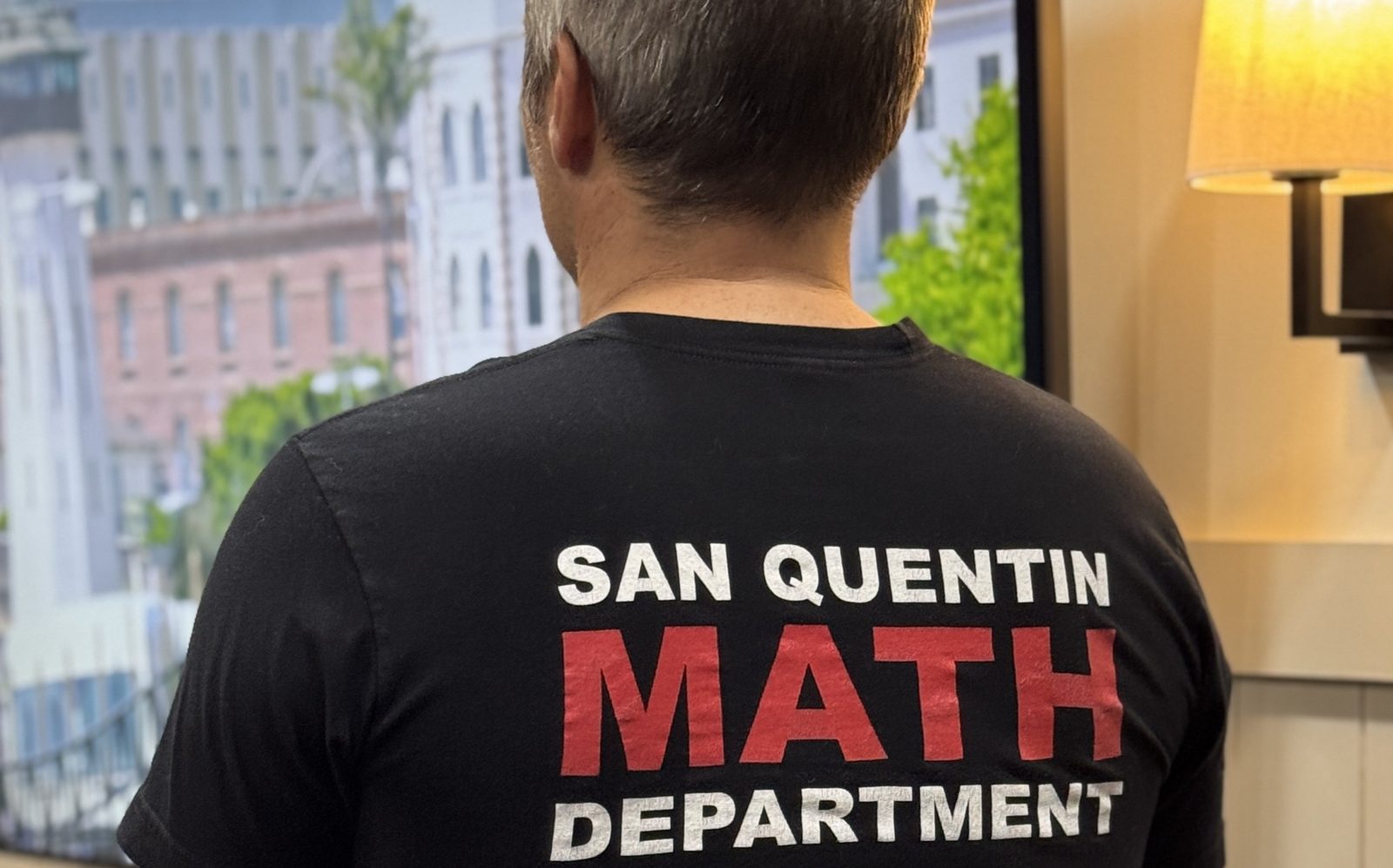
So what do you tell a kid who asks? Most of us say the same thing. You'll need it for a job someday. The research says that answer, on its own, doesn't do much.
Why is boring work easier when it's for someone else?
Psychologists David Yeager, Angela Duckworth, and their colleagues ran four studies with more than 2,000 teenagers and young adults. In one, high school students did a short, one-time exercise where they wrote about how learning could help them make a difference for other people. Their math and science grades went up a little over the next several months.
In another, students who already had that kind of purpose stuck with a boring task longer instead of switching to something more fun, and months later they were less likely to drop out of college. Wanting a fun or interesting career, which is the answer most of us give kids, didn't reliably make a difference on its own. That one surprised me.
The researchers titled the paper "Boring but Important," which is about the most honest description of math homework I've ever heard.
What does Viktor Frankl have to do with math homework?
Viktor Frankl was a psychiatrist who survived three years in Nazi concentration camps, including Auschwitz. In Man's Search for Meaning, he argued that the drive to find meaning is the most basic motivation people have, and he leaned on a line from Nietzsche: "He who has a why to live for can bear with almost any how."
I'm not comparing a prison math class to a death camp. But I watched that idea play out on a smaller scale in that laundry room, over and over. The men who weren't getting out had every excuse to quit learning. They wanted to better themselves anyway, and for some of them the why was their families and their kids. That had nothing to do with a paycheck, and it's exactly the kind of purpose Yeager's study found works, so they put up with a lot of how. Homework, tests, calculus, whatever it took. Adam Grant's team found something similar with university fundraisers. I wrote about that in My Father, Nuclear Fusion, and Anything Is Possible.
Try this
Pick your who: think of one person you could help someday by getting good at this. A friend who's stuck, a little brother, your mom's business.
Write one sentence: how does getting better at this help them? Keep it where you do your homework.
Swap the question: next time you catch yourself asking "When will I ever use this?" ask "Who could I help with this?"
My kids are going to keep asking why they need to know this, and now I've got a better answer than "you'll need it someday." It comes from men in prison denim working calculus problems at old wooden desks in a laundry room. They didn't need to know any of it. They wanted to, and I'm still proud of every one of them.
The Prison University Project is now Mount Tamalpais College, and it's still teaching inside San Quentin. If you'd like to help keep those classes going, you can give here.
What to Do the Day After You Fail →
More from Insights
Sources
- Yeager, D. S., Henderson, M. D., Paunesku, D., Walton, G. M., D'Mello, S., Spitzer, B. J., & Duckworth, A. L. (2014). Boring but important: A self-transcendent purpose for learning fosters academic self-regulation. Journal of Personality and Social Psychology, 107(4), 559–580.
- Frankl, V. E. (2006). Man's search for meaning. Beacon Press.
From Insights by Chad Kempel. Read it online at chadkempel.com/insights/when-will-i-use-this/
Get the free 10-principle guide.
Subscribe and get Anything Is Possible Was Never the End of the Sentence: 10 principles pulled from real moments, for anyone still figuring it out. Then one email when a new Insights article goes up. Unsubscribe anytime.
Just want the guide? It’s $1, no email needed.