What is the freeze response?
It's your nervous system hitting the brakes. Your brain senses a threat and locks your body up for a second or two, so you can't move, talk, or react. Annoying? Sure. But it's trying to keep you safe.
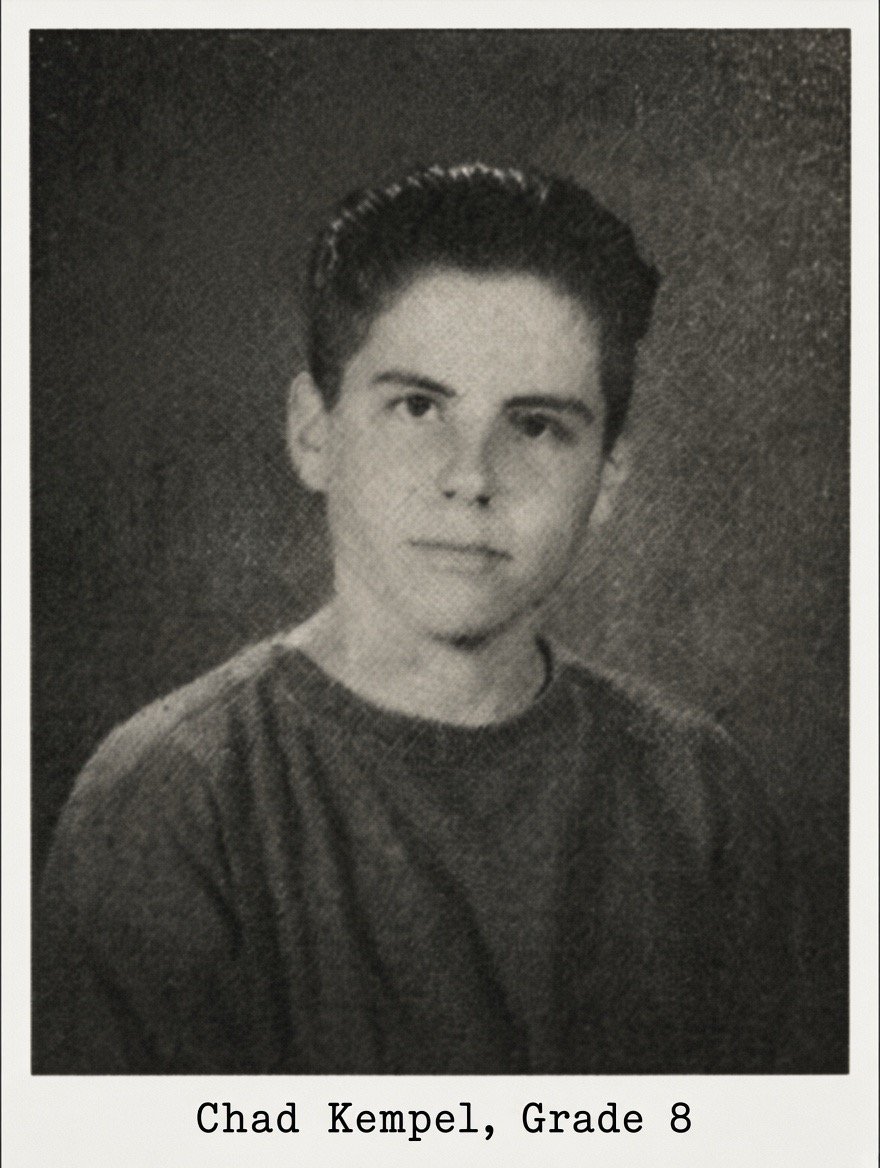
Eighth grade. Middle of the school day. I'm at my gym locker getting ready for PE, same as every other kid in there.
A boy I knew walks up. He had a disability, and I'd always been friendly with him, the way I tried to be with pretty much everybody. He's making faces at me, laughing, moving his hands around. So I smile back. Why wouldn't I?
Then something hits the side of my face.
It wasn't one of those light slaps with the fingers. It was a full, open palm, swung hard. I'm in my forties now and I still haven't been hit harder than that.
I'm stunned. I turn my head, slowly, to see who did it.
It's a different kid. About a foot taller than me. Stronger, in better shape, and everybody in that locker room knew it. So did I.
The boy in front of me had no idea it was coming either.
For maybe one second I think about hitting him back. Just the one second. Then the math catches up with me. If I swing, he beats me badly, and I lose twice.
He lunges at me and stops right before my face.
"What?!"
And I do nothing.
I don't swing. I don't say a word. I just stand there and look him in the eyes, not knowing what to do, with one thought running through my head: please let this be over.
He walks away.
The room was full. Kids everywhere, all getting ready for class. They saw it. They looked right at me.
Nobody said anything. Not that day. Not ever.
So I kept quiet too. I didn't tell my parents until I was in my thirties. That's a long time to carry one hit around.
When wrestling sign-ups came around the next year, I put my name down. That locker room had a lot to do with it. I wasn't going to be the smaller, weaker kid standing there with nothing forever. I wrote about what wrestling changed, and why fighting back isn't the fix, in another article.
But for years I didn't understand what actually happened to me in those few seconds after he said "What?!" I'd had a choice to make, and I didn't make one. Something else made it for me. My body just locked, and I stood there like somebody had flipped a switch I didn't know I had.
I didn't have a name for it back then.
I do now.
Why do we freeze under pressure?
Everybody's heard of fight or flight. There's a third one people skip, and it usually shows up first. Freeze.
I didn't have a word for any of this until I studied psychology, years after that locker room. Your amygdala, the brain's alarm system, spots danger and slams the brakes on your body before the thinking part of your brain even gets a vote.
And the brake is doing work. Karin Roelofs, who studies freezing at Radboud University in the Netherlands, describes it as your body holding still while it gets ready for what comes next. Your heart rate actually drops. Your senses sharpen.
That brake kept our ancestors alive. Honestly, it probably did its job for me too. If I'd swung, I'd have gotten flattened. The problem is your brain can't always tell a predator from a pop quiz, or from the moment somebody needs you to speak up. So the brake slams down right when you need to move.
Why naming it helps
The first step is almost too simple. A team at UCLA led by Matthew Lieberman put people in a brain scanner and showed them upsetting pictures. When people put a word to what they were feeling, the amygdala settled down. A region behind the forehead that helps manage emotions picked up the slack.
So naming it turns the alarm down and gives your thinking brain the wheel back. No pep talk required. You're just taking your hand off the brake.
The freeze that lasts longer
The freeze in that locker room lasted maybe five seconds.
The silence after it lasted twenty years.
I didn't tell my parents. I didn't tell a teacher. I told myself it was over and carried it around anyway, which, if you've ever tried that, you know doesn't work. The hit was over in a second. Carrying it alone was the heavy part.
I wasn't some rare case, either. A national survey of students ages 12 to 18 found that fewer than half of the kids bullied at school said an adult was ever told. In the 2021–22 school year it was about 44 percent. So most of them kept quiet. Like I did.
That second freeze is the one I'd go after. Same tool, too. You just say it out loud, to somebody who can actually do something.
If I could go back, I wouldn't tell eighth-grade me to swing. I'd tell him to go home and tell his parents. I should've.
Try this
In the moment: say it, even just in your head. "This is my freeze response." That alone turns the alarm down a notch.
Right after: name 5 things you can see, 4 you can touch, and 3 you can hear. Twenty seconds, tops.
Within a day: tell one person. For me, that should've been my parents. For you, pick the adult you'd actually talk to. You don't need a speech. "Something happened and I froze" is plenty to start with.
And if someone hurt you or threatened you, tell an adult. That's how it stops. If it's still happening, or you don't feel safe at school, tell an adult today, not tomorrow. StopBullying.gov has more on what to do.
Freezing doesn't mean you're weak or scared of the wrong things. It means your body is trying to protect you. Now you know how to take the wheel back.
What to Do the Day After You Fail →
More from Insights
Sources
- Roelofs, K. (2017). Freeze for action: neurobiological mechanisms in animal and human freezing. Philosophical Transactions of the Royal Society B.
- Lieberman, M. D., et al. (2007). Putting feelings into words: Affect labeling disrupts amygdala activity in response to affective stimuli. Psychological Science.
- National Center for Education Statistics. School Crime Supplement, Table 8: Students ages 12–18 who reported being bullied, including whether an adult was notified. School year 2021–22.
From Insights by Chad Kempel. Read it online at chadkempel.com/insights/freeze-response/
Get the free 10-principle guide.
Subscribe and get Anything Is Possible Was Never the End of the Sentence: 10 principles pulled from real moments, for anyone still figuring it out. Then one email when a new Insights article goes up. Unsubscribe anytime.
Just want the guide? It’s $1, no email needed.