
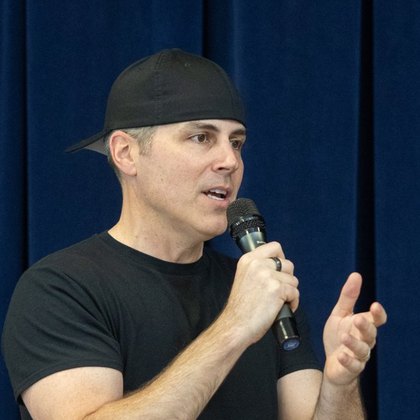
A motivational speaker for high school students who failed in public twice before he set four Guinness World Records.
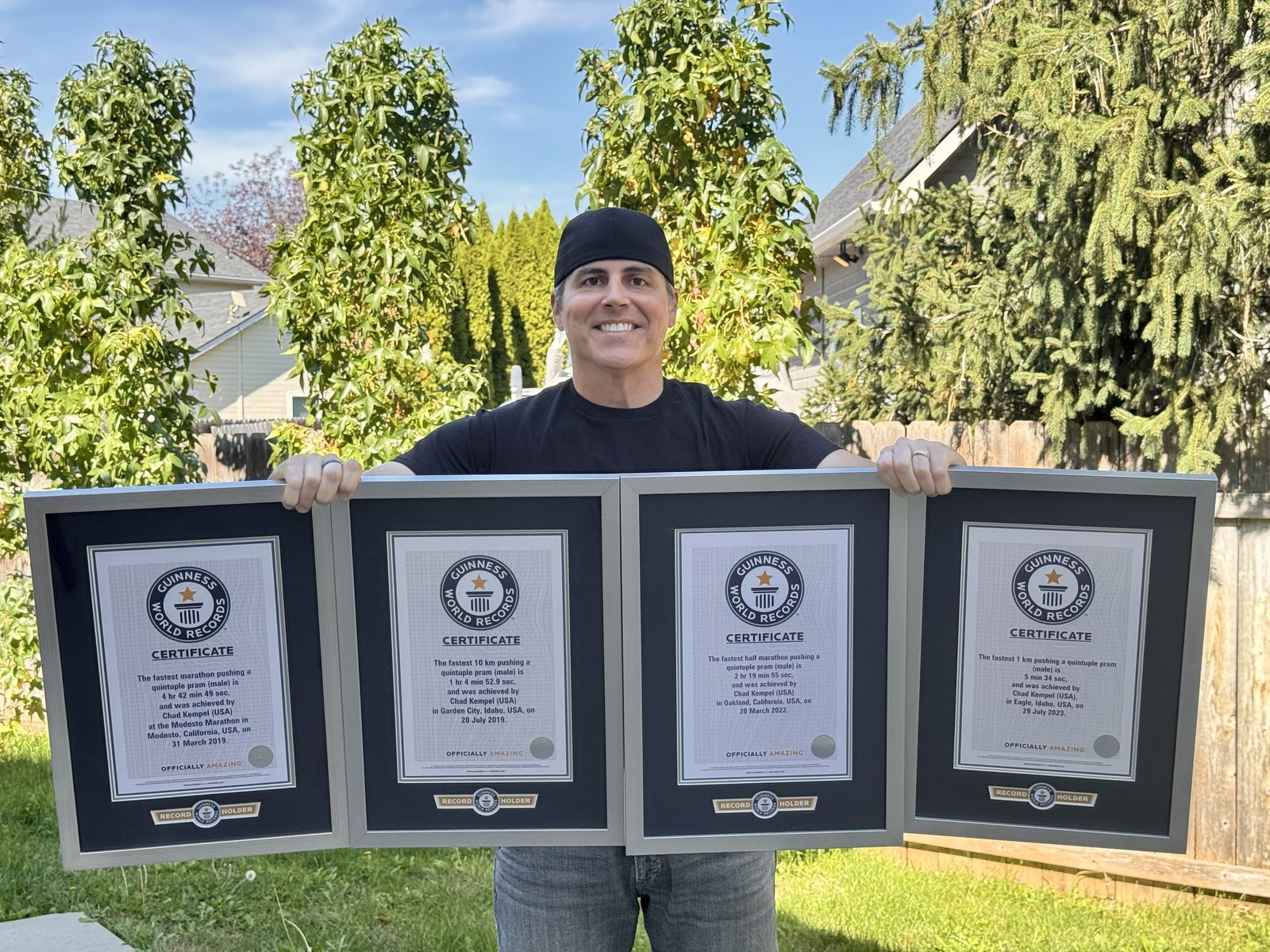
Chad Kempel is a motivational speaker for high school students in grades 9 through 12. He set four Guinness World Records pushing his quintuplets in a stroller, and the first one took him three tries. He also taught psychology and statistics at San Jose State University for five years, and every talk comes with a plan your teachers can use the next morning. Based in Boise, booking nationwide. Read Chad’s story or see all three talks.
Published rates: from $1,000 per assembly near Boise · See every region ↓Who is a good motivational speaker for high school students?
Biased answer, obviously. But here’s the case for Chad Kempel. He failed twice in public before he set four Guinness World Records pushing his quintuplets in a stroller, and both failures are in the talk. He taught psychology and statistics at San Jose State University for five years, and he built his three talks for grades 9 through 12. One assembly is $1,000 for schools within a few hours of Boise in the 2026–27 school year, and every other region’s rate is on this page.
What makes a motivational speaker work for high school students?
Students have heard “you can do anything” their whole lives, and most of them stopped believing it years ago.
A speaker who shows up to say it louder has a problem. Each of these four questions comes from a study with a name and a year on it, and they work on any speaker you’re considering, Chad included.
Does the success look reachable?
In 1997 Penelope Lockwood and Ziva Kunda had college students read about a star in their own field. Students who believed they could still get there came away inspired. Students who didn’t got no lift from it and, if anything, thought less of themselves (Lockwood and Kunda, 1997). In 2021 Jessica Gladstone and Andrei Cimpian reviewed 55 articles on role models in STEM, and one of their four recommendations is to portray the role model’s success as attainable (Gladstone and Cimpian, 2021).
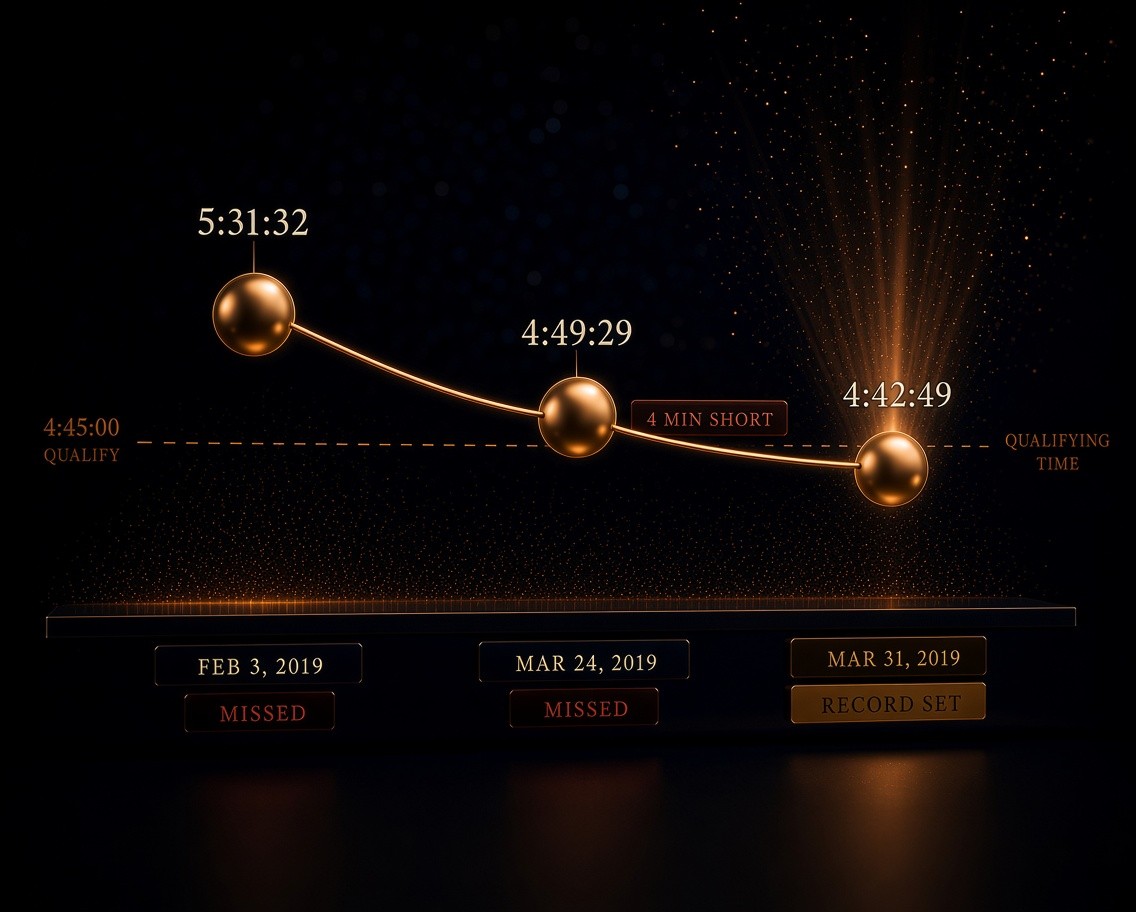
His first world record attempt missed the Guinness cutoff by 46 minutes. The second missed by four and a half. Students hear what he did the day after each one.
Does he tell students what to do?
In 2018 David Yeager, Ronald Dahl and Carol Dweck went through the meta-analyses of the standard school programs on bullying, depression and healthy eating. The programs do some good with younger kids. By ages 13 to 17 the average effect drops to about zero, and the authors trace it to adults explaining to teenagers what they should do (Yeager, Dahl and Dweck, 2018).
No lecture and no finger-wagging. Chad tells what happened and names the psychology underneath it, and students aren’t told what kind of people they are. What they do with it is their call.
Do students put it in their own words?
In a 2016 study led by Christopher Bryan, more than 450 eighth graders worked through a 30-minute packet in class. Some got the standard healthy-eating lesson. Others read an exposé on food marketing and wrote a letter to a future student in their own words, and the next day that group chose less sugar from a snack menu. The effect was small, and it was measured one day later (Bryan and colleagues, 2016).
After Anything Is Possible, every student gets a card and fills it in during their next class: a goal, the obstacle they expect, and a plan that starts “If the obstacle shows up, then I will.” Teachers don’t collect the cards. The other two talks each have a one-page take-home sheet that students keep and nobody collects.
Does anyone bring it up the next morning?
In 2006 Henry Roediger and Jeffrey Karpicke had college students read a passage and then either read it again or take a test on it. A week later the tested students remembered 56 percent of the ideas and the re-readers 42 (Roediger and Karpicke, 2006). Having to remember a thing beats hearing it again.
Your teachers get a next-morning plan for each talk, with questions to put on a classroom screen and a two-week follow-up. It’s written for the teacher who wasn’t in the gym.
Who is Chad Kempel?
Chad was the kid getting slapped in a locker room and walking the hallways alone. He became a university psychology instructor, a volunteer math teacher inside San Quentin State Prison, an Ironman finisher, and the father of seven.
He set all four records pushing his five kids, quintuplets born at 27 weeks, in a stroller: marathon 4:42:49 in Modesto, California; half marathon 2:19:55 in Oakland, California; 10K 1:04:52.9 in Garden City, Idaho; 1K 5:34 in Eagle, Idaho. Each time links to the official Guinness World Records listing. He taught psychology and statistics at San Jose State University for five years, some semesters to 125 students at a time. He is trained in QPR suicide prevention and completed psychological first aid training through San Mateo County Behavioral Health & Recovery Services.
Chad’s full story → · The full resume → · Every news feature in one place → · Every race since 2002 →
Which talk fits your high school?
Three talks, and each one is built for a different problem.
| If you want | Book | Students leave with |
|---|---|---|
| A whole-school kickoff, or students who’ve stopped believing effort pays off | Anything Is Possible | A card with a goal, the obstacle and an if-then plan |
| Words for the stress students are carrying, and a reason to ask for help | The Weight You’re Carrying | Four plain terms for what they’re feeling and a tool for each one |
| A school where fewer kids eat lunch alone | I Walked the Hallways Alone | One thing to do tomorrow: sit down next to someone who looks like they’re alone |
Anything Is Possible
The Weight You’re Carrying
I Walked the Hallways Alone
Also available for: new-semester goal-setting assemblies · graduation and commencement · student leadership events · educator conferences
How do you book a motivational speaker for your school?
- Send your school, city and dates. Use the contact page or call (208) 391-2959. You’ll hear back within 48 hours. Within a few hours of Boise, the price is already on this page.
- A short survey, then a planning call if you want one. A few quick questions for whoever knows your students best. Fifteen minutes on the phone usually covers the rest, and email works if your calendar’s full. Your counselors can have the full outline before the day.
- The assembly. The talk is built to fit your assembly block. Student Q&A comes after, then time for students to come up and talk.
- The next morning. Your teachers get discussion questions and journal prompts on the educator page. Your students get the tools from the talk on a page of their own. There’s more on what to do after the assembly.
- The paperwork. No deposit. Chad Kempel LLC invoices after the assembly, due within 30 days by check, ACH or purchase order. A snow day or a lockdown moves the date at no charge. The sample booking agreement, the parent letter and the principal approval packet are on the documents page, and there’s a guide to getting a speaker approved.
For your counselors
Chad talks about losing his twin sons, a friend who was murdered, and, in the mental health and anti-bullying talks, a friend who struggled with addiction and died by suicide. If there’s something you’d rather he leave out, he’ll leave it out.
Chad follows safe-messaging guidelines for talking about suicide and meets with your counseling team before he walks into the gym. Your teachers and counselors also get the teacher and counselor guide, with what to do if a student opens up, and your office gets a parent letter with an opt-out to send home first.
Supports your school’s wellness programming; not a substitute for counseling or clinical care.
2026–27 School Year
That’s the Local Introductory Rate for schools within a few hours of Boise, with no travel fee. Farther out, each region has its own rate for one assembly, and its page says what’s in the number.
- California $1,800
- Western states $1,800
- Midwest $4,000
- The South $4,000
- East Coast $4,500
- Alaska $4,500
- Hawaii $5,000
- Canada from C$7,000
- United Kingdom £6,000
Book a 2027–28 date by May 31, 2027, with a signed booking agreement, and you keep this year’s rate. Booking several schools in one district? Ask for the district rate.
Check Your Date →Questions high schools ask about motivational speakers
How much does a motivational speaker cost for a high school?
What do motivational speakers talk about with high school students?
Do motivational assemblies work?
What grades is this for?
How long is the talk, and is there Q&A?
What does our school need to provide?
Is the content appropriate for our students?
How do schools pay for a motivational speaker?
How far ahead should we book, and which day works best?
Does Chad travel to our state?
Is Chad insured and background checked?
Can he also speak to our teachers and staff?
What about a talk for parents?
Is Chad a motivational speaker or a psychology speaker?
Bring Chad to your high school.
Discovery calls available · Replies within 48 hours · Based in Boise, booking nationwide
Check Your Date →